From Bavel to Kenya: How Harambee Holland Passed the Baton
After nearly 25 years, Stichting Harambee Holland took a significant step last year by handing over all of its projects to the Kenyan Hongera Foundation. The farewell in Ulvenhout was both festive and emotional. Because how do you bring your supporters along in a story about letting go, trust, and ‘shifting the power’? Together with founders Roel and Marianne Meijers and special professor Sara Kinsbergen, we look back on a period of solidarity, challenges, and new ways of building connections.
The farewell gathering of Stichting Harambee Holland in the spring of 2024 was a grand celebration. In a packed community hall in Ulvenhout, more than a hundred people celebrated the moment when the foundation, established in 2001 by Roel and Marianne Meijers of Bavel, formally handed over its work to the Kenyan Hongera Foundation.
A beautiful video was shown about the foundation’s achievements and the handover to its Kenyan sister organisation—achievements that were certainly not insignificant. In almost 25 years, Harambee Holland has made significant contributions to improving the quality of education in western Kenya.
New schools were built, and existing ones were upgraded; every initiative followed a clear guiding principle: no demand, no project. Each effort also required the active involvement of local government, the school, and parents—whether through financial contributions or in-kind support.
Among those present was Jacob Omondi, for many years Roel and Marianne’s trusted partner in Kenya. He now steps in as head of the Hongera Foundation, bringing with him an impressive track record as general manager of the Parklands Sports Club and, more recently, the Royal Golf Club in Nairobi. With his extensive Kenyan network, he also hopes to give new momentum to local fundraising.
Yet when the audience—mostly loyal donors of Harambee Holland—was asked who would stop contributing once Roel and Marianne stepped down, surprisingly many hands went up. It was a somewhat painful moment for Omondi, who nevertheless stayed composed, meeting the room with a steady smile.
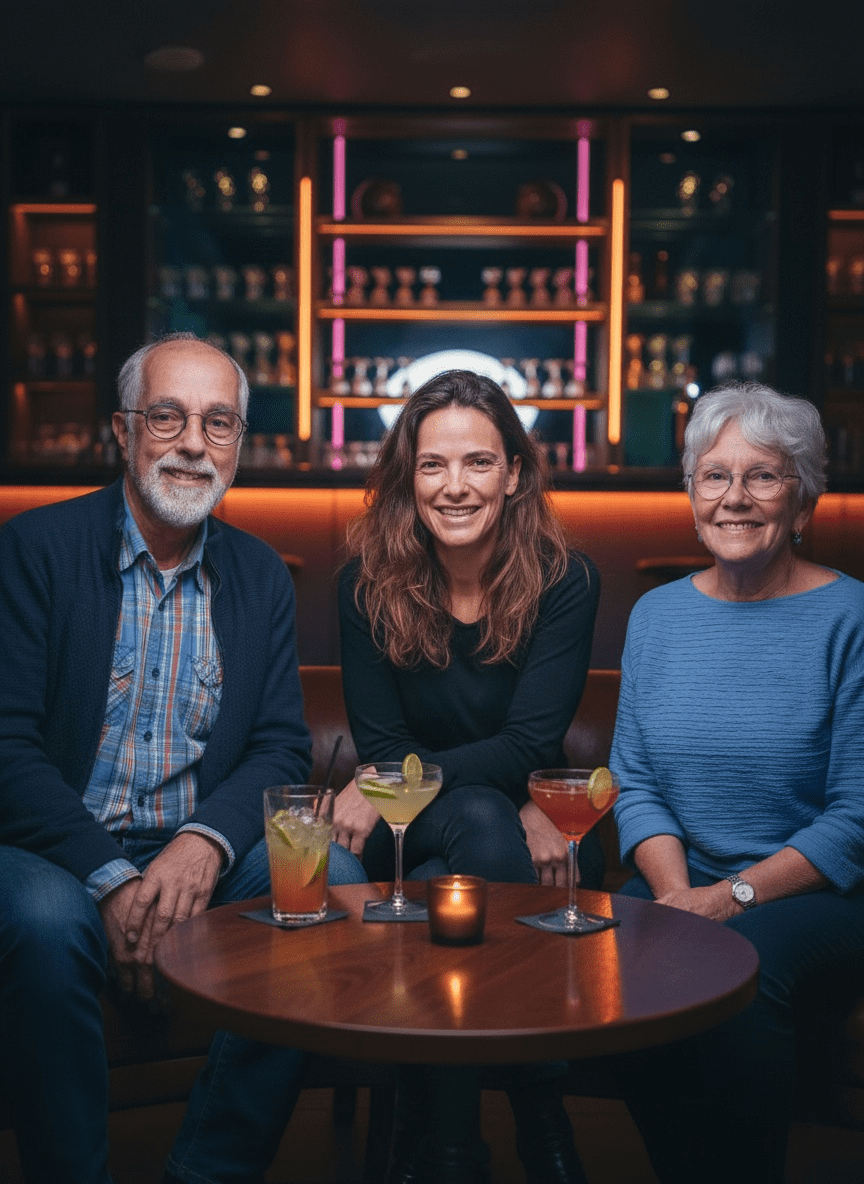
A few months later, we reflect on this in a Nijmegen café with Roel and Marianne, joined by Sara Kinsbergen, special professor at Radboud University Nijmegen, whose research focuses on the role of citizens in sustainable development. Kinsbergen has studied citizen initiatives in development cooperation for many years, with Harambee Holland involved from the very start.
Apparently, Harambee Holland’s message about handing over the projects to the local Hongera Foundation had not fully reached some of its supporters. ‘That may well be true,’ Marianne reflects. ‘We were so focused on ensuring the projects in Kenya would continue smoothly that we did not involve our own donors enough in the handover process.’
Her husband, Roel, nods: ‘But we did write about it extensively in our newsletter,’ he adds. ‘So, they could have known.’ But he also sees another issue. ‘We have always been a foundation mainly supported by people from our own network.
‘Some donors only want to give to a Dutch organisation or to people they personally know and trust. People they can hold accountable if something goes wrong. That is different from a Kenyan who lives far away and whom you do not know personally.’
Sara Kinsbergen listens carefully and says: ‘I thought it was courageous and honest that people in Ulvenhout raised their hands. There was one woman who was very outspoken and said she had started donating to Harambee Holland because of Roel and Marianne.
‘For me, that reaction symbolised the broader challenges we face in development cooperation today. We often talk about shifting the power or decolonising aid, but before that can happen, something fundamental has to shift in people’s mindset.
‘You see more and more donors giving directly to organisations in the Global South, but the Dutch public has hardly been included in this transition. Within the development sector’s bubble, a great deal of excellent work is being done to make localisation a reality.
‘However, a part of Dutch society still holds a very outdated view of development cooperation. They think we still need to send Dutch people to Africa to explain how things should be done there.’
She takes a sip of her cola and continues: ‘Besides, Roel and Marianne are local celebrities. In their community, they are as well known for their development work as singer Bono is internationally. They built enormous trust and were always the bridge between the projects in Kenya and their donors. When they step away, that is very difficult for many people to accept.’
And then there is another challenge: it will never be the same again. ‘Small-scale development cooperation is always person-to-person,’ says Kinsbergen. ‘It is not a machine where you can replace one screw with another.’
Marianne now realises that things should not remain the same either. ‘At first, I wanted the projects to continue in the same way and with the same impact. But that would saddle Hongera with an impossible task. The board of the new foundation consisted of people we personally knew well. At a certain point, I also felt that they were doing it mainly out of loyalty to Roel and me. That should never be the case.’
Kinsbergen agrees. ‘Let it go, Marianne, and do not feel obliged. The same goes for the partners in Kenya; they should not feel morally bound to continue out of gratitude. You can simply raise a glass and take pride in what you have achieved over those 25 years. It has been a beautiful expression of solidarity, and now it is time for everyone to move forward on their own path.’
Roel nods: ‘Looking back, we should have discussed that loyalty issue much more clearly with Omondi. The projects can only move forward if he builds a completely new team with no ties to us. Fortunately, he now has that.’
One of the reasons Roel and Marianne decided to hand over the foundation was age (Roel is now 76 and Marianne 71), and a desire to spend more time with their grandchildren. Yet the calling remains. From the Netherlands, they continue to see themselves as world citizens, finding new ways to contribute.
They wrote a book, ‘*Samen de handen ineen’ (Joining Hands Together), about their experiences, including dos and don’ts—an invaluable resource for other small organisations working in development cooperation in the Netherlands.
They also occasionally speak across the country about their work. ‘We were recently invited by a service club in Zeist and came back really enthusiastic,’ says Marianne. ‘You notice that the simple, basic story resonates with people. And also, the fact that local people and local authorities always contributed to our projects, so it was never entirely dependent on foreign support.’
Sara Kinsbergen believes the couple can still play an integral role in Dutch society in getting citizens engaged in development cooperation. ‘Development organisations need to step out of their bubble and bring back the human connection.
‘Roel and Marianne have shown exactly how that can be done. We need more bridge-builders like them, who, by sharing their stories and experiences, help to build global solidarity in the Netherlands—bridge-builders to explain how the world is interconnected and that we all depend on each other.
‘Right now, there are still people who think that the Dutch border defines where problems begin and end. It is about seeking connection. I always find it striking that staff of development organisations are quicker to hop on a plane to Kenya than to visit a community centre in a Dutch town,’ she says.
‘A bit like in the Efteling amusement park,’ says Marianne. ‘What I like there is that people from all walks of life stand together in long lines before a ride, and they start talking to each other. That, to me, is what development cooperation should be like. It begins with conversation. The results may not be immediate, but it can be the start of something meaningful.’
In the meantime, they have put this idea into practice by starting Café Bavel at their kitchen table every two months. Six people are invited to discuss current issues in the Netherlands in relation to the world: how involved do you feel with the world, and in what ways can you shape that involvement?
One or two ‘professionals’ in the field of development cooperation join, along with four or five citizens from their own network or community. An anonymised report of the discussions is then published on *Vice Versa’s website.
Sara Kinsbergen is also very enthusiastic about this. ‘We really need to highlight solidarity between people. And how do you do that? By engaging in conversations together. Not the one-way conversation that development cooperation is important, but a listening conversation about what kind of society we envision together.
‘The challenges we face here and elsewhere, and how we can tackle them together. It may not end world hunger overnight, but it is precisely the kind of conversation we need.’
Leave a Reply