The Voices of Farmers legitimized: Amsterdam Cocoa Week 2026
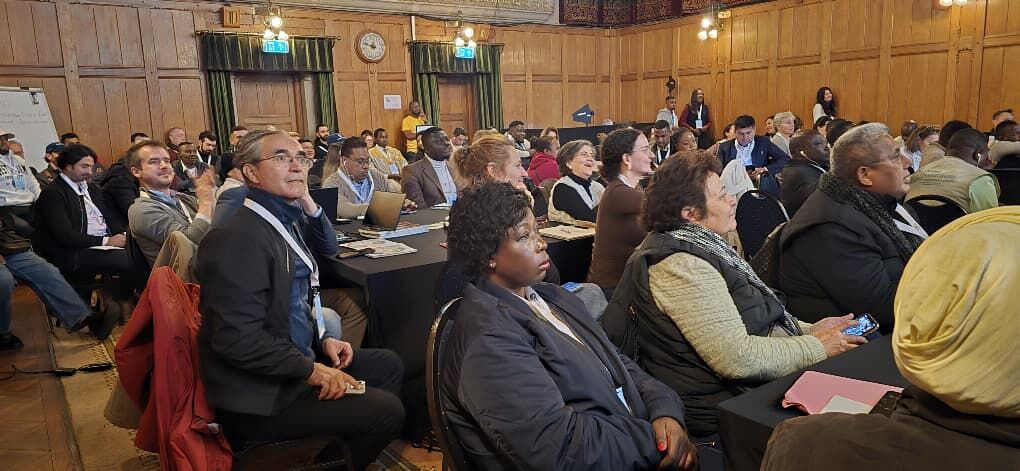
Yesterday’s Grand Opening of Amsterdam Cocoa Week 2026 marked a deliberate shift in tone. This maiden Farmers’ Day session was a bold act of rebalancing power by dedicating the platform to cocoa farmers and the organizations genuinely invested in their realities.
For years, global cocoa conversations have revolved around compliance frameworks, market access, traceability systems and sustainability benchmarks. This time, however, the microphone was intentionally handed to those at the foundation of the value chain. The message that echoed through the room was inclusion must move beyond rhetoric and translate into structural participation.
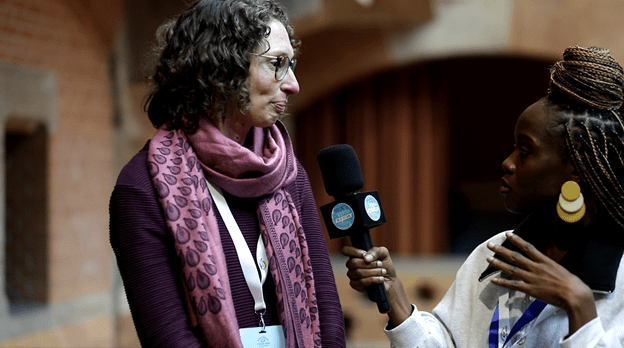 Hannah Davis of Farmers Voice Radio on the left and Elizabeth VVMG journalist on the right
Among those engaging this conversation was Hannah Davis of Farmers Voice Radio, who has spent over 15 years working with smallholder farmers globally. Her work centers on participatory radio as a development tool designed to reach marginalized communities with timely, accessible information.
“We work with groups of smallholder farmers globally, training them on how to use radio as a participatory communication tool to reach marginalized farmers with information that they need, when they need it, in the language that’s most accessible to them,” she explained.
In Ghana’s northern region, her organization supported women farmers to design and host their own radio programs. The results were safer harvesting practices and improved production standards that opened pathways into international supply chains. Now, the focus is shifting toward cocoa, with an upcoming workshop aimed at training Ghanaian cocoa cooperatives to use radio as a tool for strengthening knowledge exchange within farming communities.
For Davis, one of the most persistent gaps within the cocoa sector is the invisibility of women’s contributions. “Women’s contribution to cocoa production has been invisible over the years and yet they are an essential part of post-harvest production. What radio can do is give women a voice and give women agency.”
She noted that when women farmers are placed behind the microphone and positioned as knowledge holders, perceptions begin to change. They are recognized not merely as labor contributors but as business leaders in their own right. Over time, many grow in confidence and step into leadership roles within their cooperatives and communities.
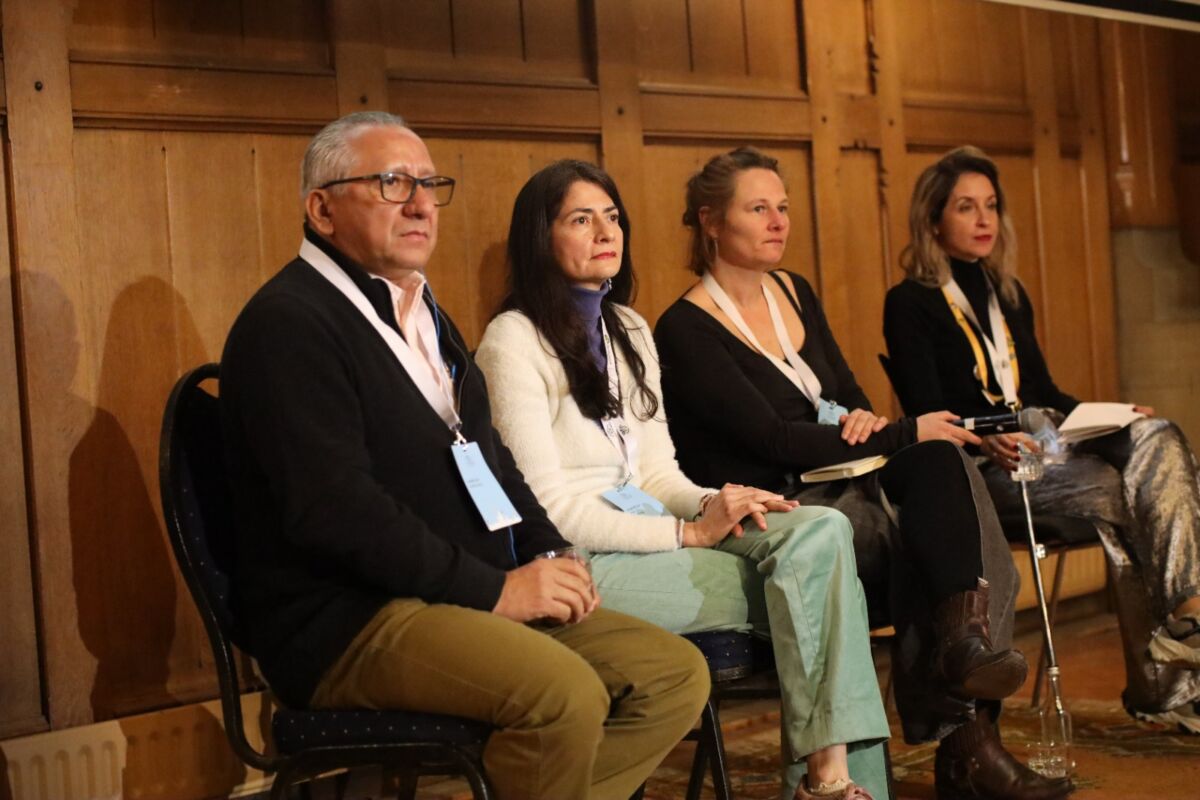
Reflecting on the evolution of Amsterdam Cocoa Week, Davis acknowledged how far the platform has come. “I came to the festival around 10 years ago and there wasn’t a huge representation from farmers. Ten years later, it’s moved on massively. It’s wonderful to see so much farmer representation here.”
The challenges facing young farmers, however, remain deeply structural. Bagonza Gerald of Smart Cocoa, a young Ugandan cocoa farmer, spoke candidly about barriers that discourage youth participation. Land inheritance systems, he explained, often delay ownership for young people. “In most cases, as inheritors, you have to wait for your parents to first die so that you own land as a youth. Eventually it becomes hard to invest in agriculture.”
 Bagonza Gerald of Smart Cocoa, a young Ugandan cocoa farmer on the right
Beyond land access, regulatory uncertainty compounds the risk. Without a functional cocoa policy in Uganda, Gerald argues, the sector lacks clear direction. “You cannot invest in something that you know is at risk. Everyone is doing cocoa the way he wants. That puts the sector at risk. And the youth will not go into risky things.”
Yet he views gatherings such as Amsterdam Cocoa Week as long-term investments hence solutions will require patience and network-building. Gerald credits previous participation in the forum with helping his cooperative secure new market connections and navigate compliance under the European Union’s deforestation regulations.
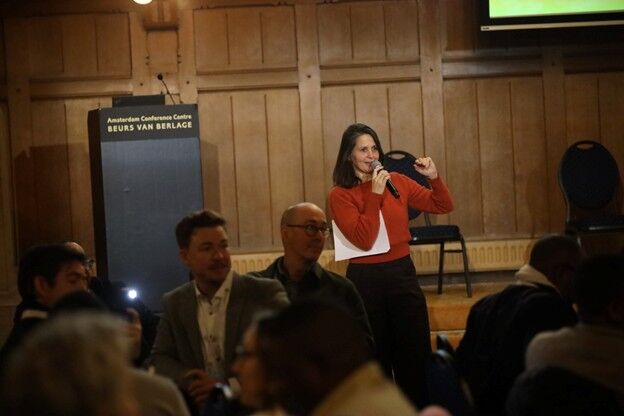
However, volatility in global cocoa prices remains his greatest concern. “My biggest fear with the cocoa sector is price fluctuation. As we talk now, the prices are really dropping, and cocoa consumers are getting alternative ingredients. Probably in the future, cocoa will be substituted.”
His fear reflects a wider industry anxiety about safeguarding cocoa’s long-term relevance in a rapidly changing global market.
As the first day of Amsterdam Cocoa Week concluded, one theme stood out above all others. The future of cocoa cannot be negotiated in rooms where farmers are absent. Access to information determines agency. Youth require structural stability to invest confidently. Women must move from participation to power. And price stability remains central to the sector’s survival.

If the cocoa industry seeks long-term durability, its legitimacy will depend on how deeply farmer voices are embedded into policy, trade and governance systems. Yesterday did not resolve every tension within the value chain but it signaled a decisive shift that farmers are no longer peripheral participants; they are emerging as recognized actors in shaping cocoa’s future. That shift may ultimately carry more weight than any single panel outcome.

Leave a Reply