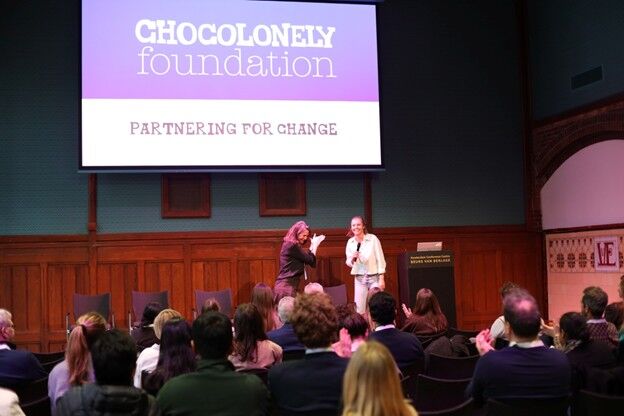
When the Microphone Changes Hands: Vice Versa Media Ghana at the Chocolonely Foundation
On Friday afternoon, after a demanding week of panels, negotiations, and strategic conversations across the cocoa sector, a final gathering offered something different. Hosted by Tony’s Foundation, the event became a moment of visibility for the foundation, its partners, and the long-term investments shaping cocoa communities beyond sourcing models. Among the partners invited to present was Vice Versa Media Ghana.
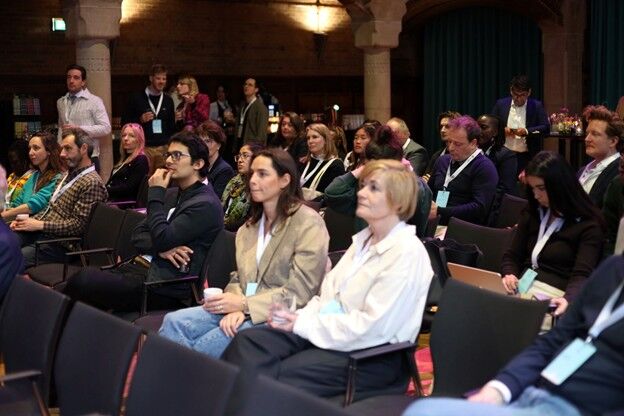
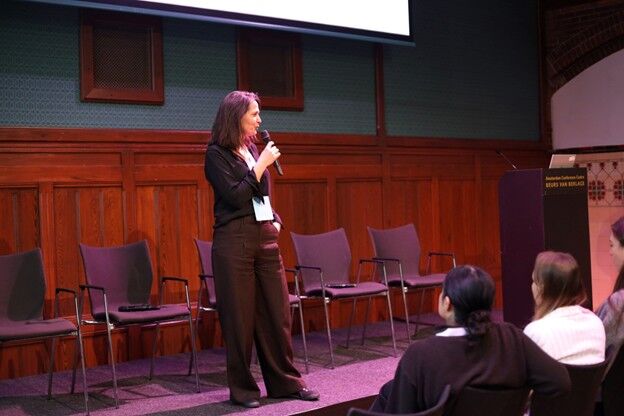 Anna Laven Head of Board for Choconolonely Foundation officiating the event
A Foundation Stepping Forward
For much of its existence, the foundation has operated quietly in the background. Independent in structure yet closely connected to Tony’s Chocolonely and Tony’s Open Chain, it has focused on strengthening the enabling environment around cocoa farming communities.
Established in 2008, the foundation emerged from the journalistic roots of Tony’s Chocolonely’s founders. When the company began generating profit, funding was directed toward initiatives that initially supported local journalism in West Africa.
During the session, foundation representatives emphasized that their role extends beyond complementary funding.
“We are not only supporting projects. We are investing in the systems that allow cocoa communities to thrive education, healthcare, youth opportunity, and voice.” Kakra Ataa-Asantewaa Martha, one board member noted.
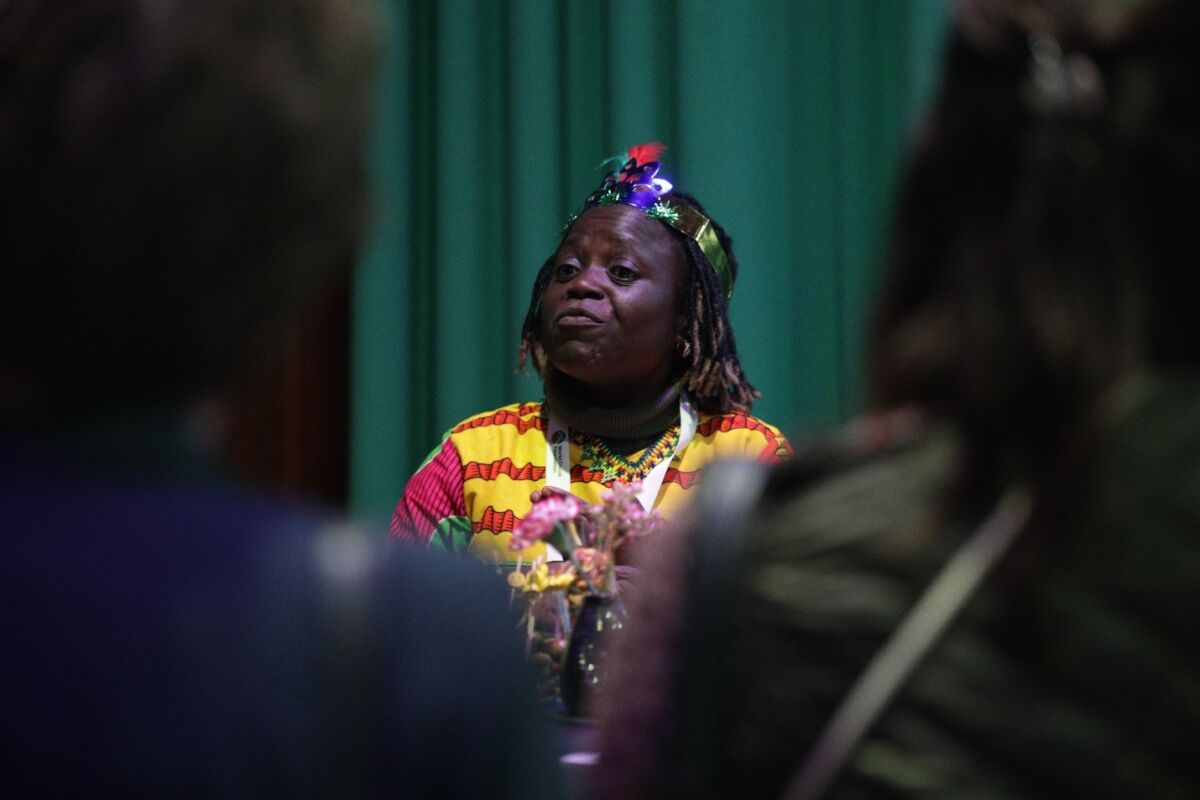 Kakra Ataa-Asantewaa Martha, one board member
From Funding to Institutional Growth
Representing Vice Versa Media Ghana, Naana Yaa Asiedu Boatema the country coordinator positioned the presentation as an institutional journey.
“Support from Tony’s Foundation did not just fund content, it strengthened our governance, our compliance systems, and our operational backbone. That foundation allows us to remain independent.” Naana asserted
Vice Versa Media Ghana, a youth-led non-profit media organization rooted in Ghana’s cocoa communities, focuses on cocoa sustainability, gender equity, agriculture, and youth livelihoods. Its work blends journalism, documentary storytelling, and strategic communication anchored in fairness-centered African narratives.
Within two years, the organization moved from rapid growth to structured consolidation. It now produces over one hundred multimedia pieces annually, sustains a digital audience exceeding fifty thousand, and has deepened national partnerships including collaboration with the Ghana COCOBOD on the Women in Cocoa Festival. Internationally, it has served as a media partner for Chocoa 2026.
“The shift is not just about scale, it is about positioning Ghanaian storytellers inside global cocoa conversations, not outside of them.” Naana noted.
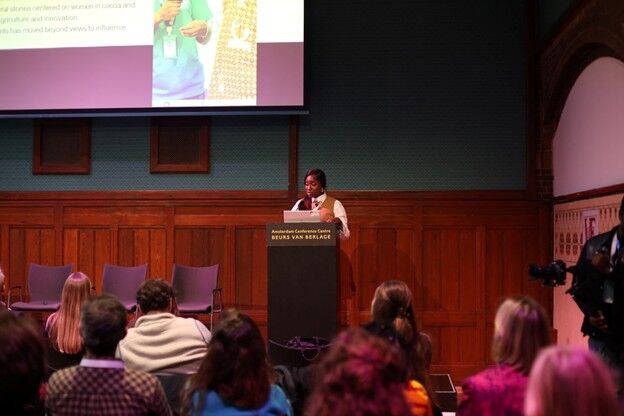 Naana Yaa Asiedu Boatema the country coordinator of VVMG giving a speech
Journalism as Structural Work
The presentation did not avoid structural realities. Ghana continues to grapple with youth unemployment, ethical journalism faces funding volatility and production resources remain constrained yet Vice Versa Media Ghana framed its work as structural intervention.
“We see journalism as employment, dignity, and long-term institutional building, when young people from cocoa communities document their own realities, narrative authority shifts.” Naana explained.
The organization has created professional pathways for young journalists, videographers, and photographers while training youth storytellers within cocoa-growing regions.
In an industry where African narratives frequently travel outward for interpretation, Vice Versa Media is positioned as a pathway for African narrative.
A Five-Year Commitment
Looking ahead, Vice Versa Media Ghana outlined a five-year roadmap centered on three priorities: expanding the Women in Cocoa Festival as a national platform, establishing structured community journalism programs for young girls, and sustaining independent reporting on cocoa livelihoods and rural innovation.
“The question is not whether stories exist, the question is whether institutions exist to tell them consistently.” Naana said.
More Than Grants
The event itself reflected the foundation’s broader philosophy. Partners presented interventions ranging from school infrastructure and healthcare access to commercial innovations in cocoa pulp utilization. Discussions touched on supply chain reform, hybrid financing models, and farmer representation.
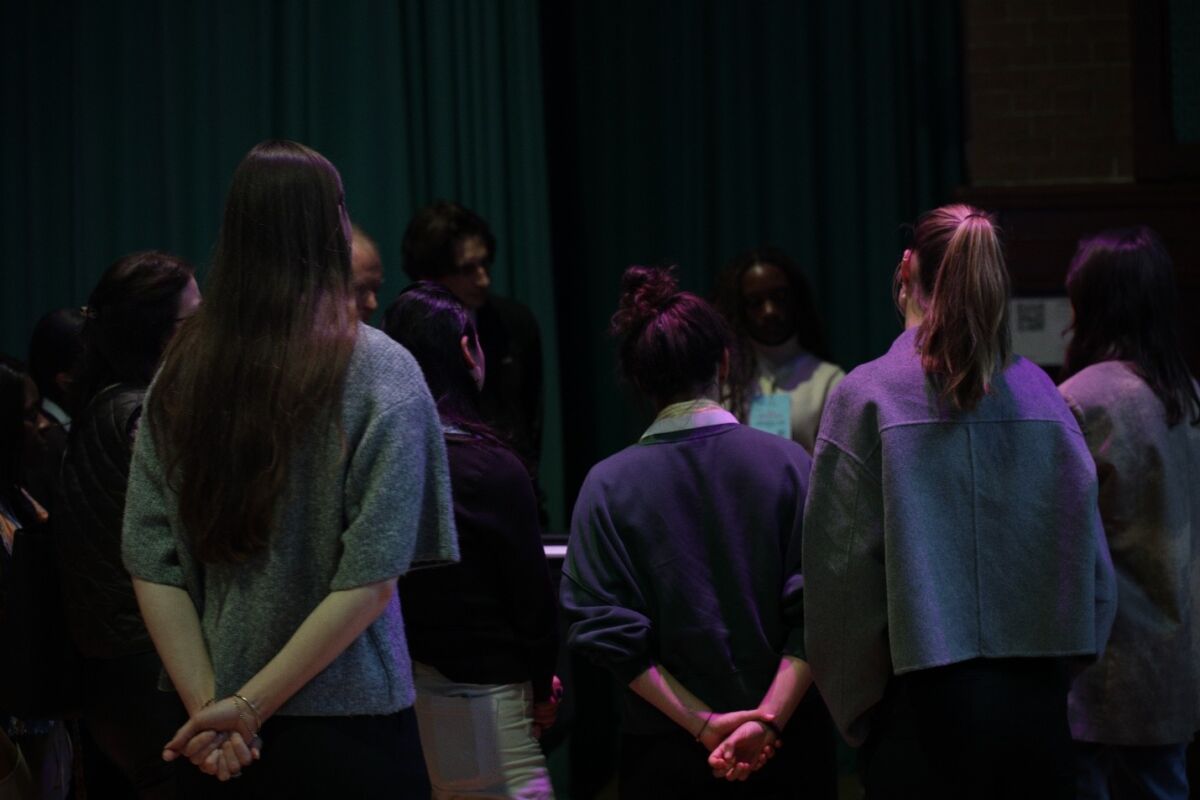
Participants were encouraged to move freely across conversations: a format described as the “law of two feet,” allowing individuals to engage where contribution felt most meaningful.
The structure mirrored the foundation’s approach that systemic change requires multiple entry points.
A Shared Conviction
Naana concluded with a statement that resonated across the room.
“If cocoa is global, justice must be local, and justice begins with who holds the microphone.” Naana mentioned
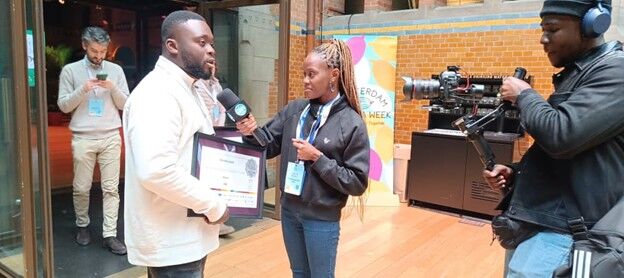
As a young African journalist in that space, that statement felt like a moment of reckoning. We were in Amsterdam to document Amsterdam Cocoa Week 2026, to report on the global conversations shaping the cocoa sector, and to tell those stories through our own lens.
For decades, many of the most influential cocoa conversations have taken place in rooms far removed from the farms where cocoa is grown. This time, we were inside those rooms asking questions, filming panels, capturing nuance, and shaping the narrative in real time.
To stand there and speak about the impact our storytelling has already made; amplifying farmers, centering women, creating opportunities for young journalists while simultaneously documenting the industry’s future direction felt significant.
Leave a Reply