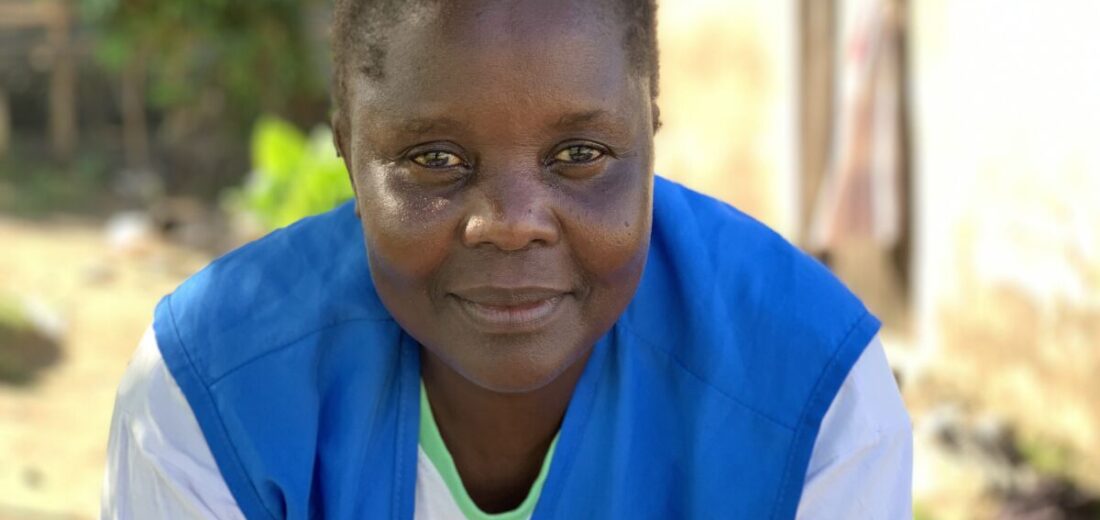
A Day with a Community Health Promoter
Before the sun is fully up, Cyprose is already on her feet, medical kit in hand, moving from home to home in her village. Her day will be long, unpredictable, and filled with emergencies, yet she meets it with a warm smile. This is the world of a community health promoter—relentless, compassionate, and transformative.
Have you ever wondered what a typical day looks like for a community health promoter in a developing country? What fills their hours as they serve remote, underserved communities? What keeps them inspired and committed to their work? And how does their role compare to that of other health professionals?
In search of answers, and to catch a glimpse into the world of a community health worker, I travelled to Victoria Friendly Montessori in Kamasangre West, Suba North, on Rusinga Island, Homabay County, a place that always feels like home to me.
Usually, I take a direct bus, but this time I chose to experience part of my journey by water bus. As the boat glides over the calm, sparkling waters of Lake Victoria, the breeze brushes gently across my face, and the view is breathtaking.
Lush green hills rise from the shoreline, dotted with homesteads, as fishermen in canoes cast their nets under the golden morning sun. There is a peaceful rhythm to island life that draws you in. My mission on this trip is simple: to step into the shoes of those who wake up each morning with a mission larger than themselves.
Victoria Friendly Montessori (VFM) is a community-based organisation that provides a peaceful and inspiring learning environment for young children. ‘It has been operating in the area since 2005,’ explains Philip Ongeri, the Project Manager of VFM.
‘Initially, we focused on projects supporting orphans and vulnerable children affected by the high prevalence of HIV/AIDS among adults. Many children had lost one or both parents and were being raised by mothers, grandmothers, or other relatives.
‘At the time, there was no school in the area where children could access basic education, despite a population of around six thousand people. We decided to start Victoria Friendly Montessori School to bridge this gap,’ he says.

When the children first began attending school, it quickly became apparent that many arrived without food, and some were already malnourished. This prompted the introduction of a school feeding programme, ensuring that pupils received two meals each day; breakfast and lunch.
As the programme grew, VFM expanded its vision and developed five thematic areas: Health, Economic Empowerment, Education, Water, and Sanitation. This holistic approach was designed to benefit the wider community, with a particular focus on women and school-going children. To make these initiatives both sustainable and effective, VFM works closely with Community Health Promoters, who play a central role in bringing the projects to life.
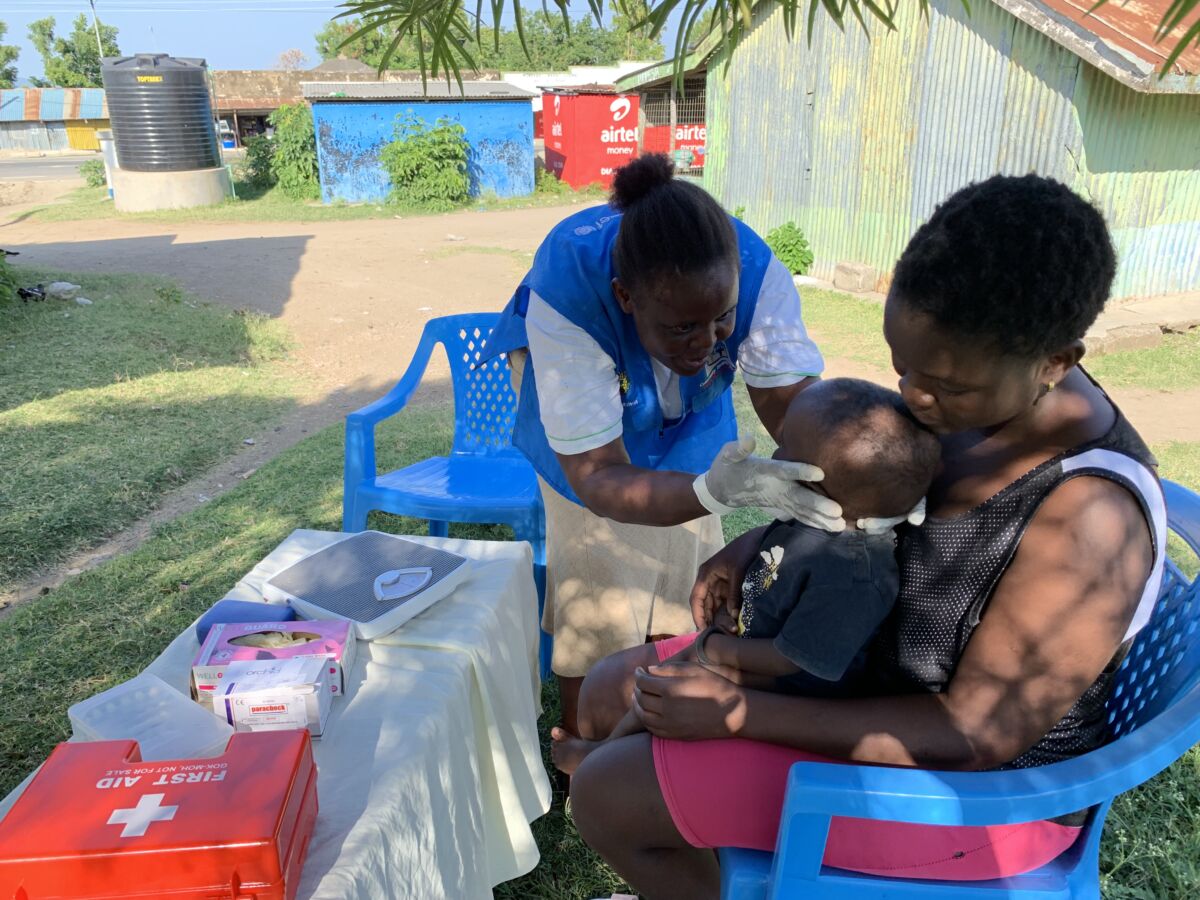
I arrive at Waembe Cluster, at Cyprose’s house, at half past eight in the morning and find her already deep into her work. Neatly dressed in her uniform, she stands beside a well-organised toolkit stocked with weighing scales, testing equipment, gloves, and other essentials.
She is advising a young woman holding her child, looking every bit like a doctor in action. Despite being in the middle of her work, Cyprose greets me with a warm, ever-present smile. From a distance, it is easy to see the pride and passion she carries.
She pulls out a chair for me and says warmly, ‘Feel welcome, my daughter.’ The introductions are light-hearted and full of laughter. ‘I am a widow, a mother, and a proud Community Health Worker,’ she says, her smile radiating quiet strength.
‘You see, this work we do is not just about skills, it is about heart,’ she says with quiet conviction. ‘You must be part of your community. If you do not love the community, then you do not deserve to be a community health worker.’
Cyprose tells me she has a full day ahead, with several households to visit, but first, she takes me back to the early days of her journey. She recalls earning a stipend of just 2,500 shillings a month while serving as a Community Health Promoter under the County Government.
Life, she admits, was tough. Things began to shift when she got the opportunity to volunteer at Victoria Friendly Montessori, a turning point that brought her work new meaning. We set off to the next household. The walk is longer than I expected, but it allows our conversation to flow more deeply.
She tells me that most mornings start in a rush, as she often has to respond to emergencies. Today, with no urgent calls, she has the rare chance to check in on her neighbours before visiting the rest of the households on her list.
It is in this moment, as we walk, that I begin to understand how demanding her work truly is. Being a community health promoter in a rural area requires a wide range of skills, an endless supply of patience, and a deep well of passion.
We arrive at the home of a young expectant mother. I introduce myself, then step aside to give them privacy as they go inside for a medical check. A short while later, they join me for a conversation. Cyprose gently explains that the young woman requires regular check-ups and must visit the clinic every month.
From her stories, I learn that Cyprose wears many hats in her community, not just as a social worker, but as a nutritionist, assistant nurse, public health promoter, and trusted advisor. Officially, she is recognised as a Community Health Promoter, working closely with Victoria Friendly Montessori and nearby health facilities.
Yet even this title hardly captures the breadth of her influence. With visible pride, she lists the five pillars of VFM: Health, Economic Empowerment, Education, Water, and Sanitation—explaining how these have brought lasting change to the community.
She and her fellow community health workers champion simple but life-saving practices: airing utensils after washing rather than stacking them, washing hands after using the latrine, and hanging clothes on lines instead of spreading them on the ground, where harmful insects lurk.
As we walk, I notice how the community responds to her. Children call out her name, women wave from their compounds, and some stop to chat briefly. Cyprose is not just known here, she is deeply trusted, almost a local celebrity. Several residents even approach her to share concerns or updates, as though she is a bridge between them and the larger world.
Curious about how these health workers manage to sustain their efforts, I ask her. She explains that each maintains a kitchen garden, providing a steady supply of vegetables for their families.
As part of their training at VFM, they learned agriculture and entrepreneurship skills, which they are encouraged to put into practice. In addition, they receive a modest stipend to support their work—a small but meaningful acknowledgement of their contribution.
I find myself wondering aloud how her role compares to that of a professional social worker. Cyprose pauses thoughtfully before responding. What sets her apart, she explains, is that she is part of the very community she serves. Her deep knowledge of the context gives her an advantage. She speaks the local language, understands the culture, and shares a similar way of life.
‘Professionals may come from outside the community,’ she says. ‘Some are doctors or people from a higher social class, which can intimidate residents. They might feel shy or expect such professionals to keep to their circles. But when the health worker is one of them, they open up easily.’
We continue to two more households, and by now I am starting to feel the weight of the day. My legs ache, and I silently wish to head back. But for Cyprose, the work is just hitting its stride. In each home, she moves with calm efficiency, checking patients, spotting signs of illness, writing referrals, and giving clear instructions for hospital visits.
By the time we finish, we have visited five households. Cyprose tells me this is a typical day for a Community Health Promoter. There is no neat nine-to-five routine. Some days she gets home late; on others, she may be called in the middle of the night to respond to an emergency. For her, service has no closing hours.
When I ask if she ever gets time to rest, Cyprose smiles softly. Being a community health promoter, she explains, is more of a calling than a career pursued for financial gain. It is demanding, yes, but deeply fulfilling.
The greatest reward, she says, is witnessing a mother deliver safely, both mother and child healthy, or seeing an elderly neighbour properly fed and cared for. Those moments, she confides, make all the challenges worthwhile.
Harrie Oostrom, one of the co-founders of Victoria Friendly Montessori, shares this sentiment. He believes community health workers have a unique advantage over professionals.
Unlike doctors or nurses who may be posted to an area for a short period, often unfamiliar with the culture or daily struggles of the community, these workers are rooted in the very places they serve.
Harrie also raises an important point about sustainability. Community health workers remain long after projects end or external partners move on, continuing to walk alongside their neighbours with quiet dedication. Professionals may bring expertise, but community health workers bring constancy.
To Harrie, the relationship between professionals and community health workers is complementary; each brings a different kind of expertise. But when it comes to engaging the community and ensuring lasting change, he is clear: community health workers come first.
And after spending the day with Cyprose, I understand why. Her life is busy, demanding, and often exhausting—but it is also profoundly meaningful. Community health workers are the sparks that ignite transformation; the stewards who keep the flame alive long after others have left. In many ways, they are the heartbeat of community development.

Leave a Reply