
Breaking the data siege
For decades, data has been harvested from informal settlements—extracted, published, and locked away from the very people it describes. Now, the tide is turning. Communities are stepping into the driver’s seat, demanding access, validation, and action—no longer subjects of study, but stewards of the information that shapes their lives.

Data is an important component in development and many other aspects of today’s lives. It drives decision-making processes that, in turn, influence how resources are allocated. From policymakers to field implementers, everyone relies on data to inform their actions.
Consequently, there has been a growing demand for studies—both commissioned and unsolicited—on governance, sustainable development, conflict resolution and transformation, socio-economic progress, and resilience over the past few decades.
Academics and professionals from the corporate sector have explored various regions, armed with hypotheses they aim to test. For instance, one common hypothesis suggests that increasing taxes on tobacco products would lead to reduced consumption among users.
Others seek to examine real-time, real-world correlations, such as the relationship between rising crime rates and high levels of youth unemployment. Informal settlements have long been easy targets for data collection. With residents often facing hard times, it becomes easier to conduct surveys among them.
These communities are frequently seen as more approachable and readily available due to perceived social disadvantages—lower levels of literacy, limited legal awareness, and less exposure. For years, scholars and researchers have entered these settlements, conducted their studies, and left—often without validating their findings with the people they studied.
Ironically, those considered suitable for extracting information are suddenly deemed unqualified to verify it. The collected data is later presented and published—shared in boardrooms and reports—while the communities that provided the information remain unaware of how it was used.
Moreover, data is often gathered by people unfamiliar with the local context, sometimes from entirely different regions. This reinforces a troubling assumption: that these communities are good enough to provide data, but not worthy of meaningful or constructive engagement.
Recommendations and suggestions often look impressive on paper but are rarely implemented, partly because duty bearers are not made aware of the findings in the first place. As a result, decisions are made arbitrarily, and development agendas are pursued blindly—like shooting arrows in the dark, hoping to hit the target.
At the same time, informal settlements tend to attract numerous interventions aimed at addressing social challenges or emerging issues such as climate change. Development partners often rely on the data collected to design programmes and projects intended for these communities.
However, because the data may be disconnected from the lived realities on the ground, resources are often misdirected toward issues that are not truly relevant to communities living in survival mode. This leads to inadequate and ineffective responses to their actual needs.
Beyond validation, these communities are often not granted access to the final reports. As a result, while they participate in the research process, they remain unaware of the outcomes. This disconnect undermines their confidence in referencing facts and figures that influence decisions around infrastructure development and public service delivery.
Ultimately, it strips them of the power to engage in civic duties, like social accountability, meaningfully. In some cases, even publicly funded research data is not made available to the general public. This is particularly troubling given that data-driven interventions have been shown to deliver lasting, positive impacts.
Yet, policies that shape development agendas are often crafted without incorporating relevant research findings. This weakens implementation efforts at the grassroots level, creating fertile ground for systemic issues—such as police brutality—to persist and flourish.
‘I have been part of many studies as a respondent,’ Aisha Kombo tells me during our interview. ‘One-on-one interviews, focus group discussions, filling out questionnaires—I have participated in so many.
‘However, the researchers rarely come back with the findings. Sometimes, I am invited to a launch event where the results are being presented, and I wonder why we are not consulted to validate the findings before they are published.’
Mzee Oloo, a village elder, echoes Aisha’s frustration. ‘They collect information from us, but it always feels like it is meant for someone else. Meanwhile, we continue to face the same challenges—recurring floods, long droughts, and poor sanitation. Nothing seems to change.’
With a pensive look, he adds, ‘It feels like we are trapped in a loop—the knowledge that is supposed to be our key is kept out of reach. Knowledge is under siege,’ he chuckles, ‘colonised and reserved for a select audience. Maybe that is why we have seen so little development in our slums.’
He pauses, then reflects. ‘There was a time I walked with some researchers as their guide. I ended up being a translator, not just for language but for context. There was a clear disconnect between them and the people they were studying.

‘I found myself explaining local realities, bridging cultural gaps, and giving background—essentially becoming a consultant. They were navigating foreign concepts without understanding the ground they were standing on,’ he states.
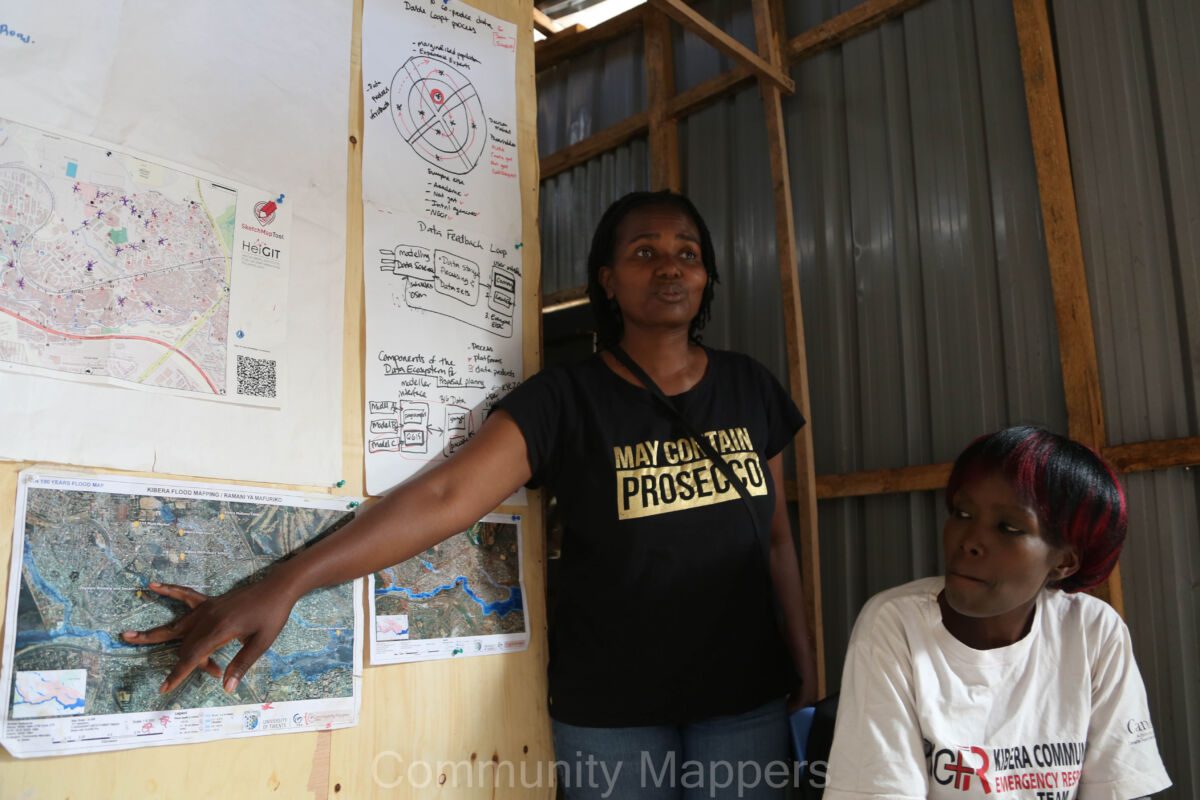
It is against this backdrop that I was inspired to establish a community-based organisation dedicated to making data accessible to the community. Community Mappers not only conducts research in informal settlements but also translates the findings into accessible, relatable language for local actors.
This data is then used to influence policy formulation, review, implementation, and oversight. By equipping communities with information, Community Mappers transforms residents from passive subjects of development into active, empowered participants—fostering local ownership and accountability.
The organisation has conducted several studies with direct involvement from the communities being studied. For instance, Onekana explored the impacts of climate change and the resulting social disparities. The Trash Study (2022) undertook a census on waste, examining patterns of trash distribution, composition, and nature.
Another study assessed the impact of COVID-19 on young women living in informal settlements, providing critical insights into how crises disproportionately affect vulnerable groups. Data is no longer reserved for a select few or confined to academic journals and inaccessible reports.
Instead, it is now used interactively to drive meaningful, transformative development. Unlike in the past, the data is localised and made available at the source. Activists are equipped with accurate and relevant data to support their advocacy and influence real change.
As a result, interventions are more timely, better targeted, and more effectively aligned with community needs. For instance, during the COVID-19 pandemic, local data was used to identify priority areas for setting up handwashing stations and distributing sanitisers and face masks. These informed actions helped curb the spread of the virus by responding directly to the needs on the ground.
Data decolonisation also requires simplifying data and making it accessible to the public. Too often, data is locked away in academic journals, written in complex language and inaccessible to the very communities it concerns. To promote access and ownership, local efforts must be recognised and integrated into the entire research process.
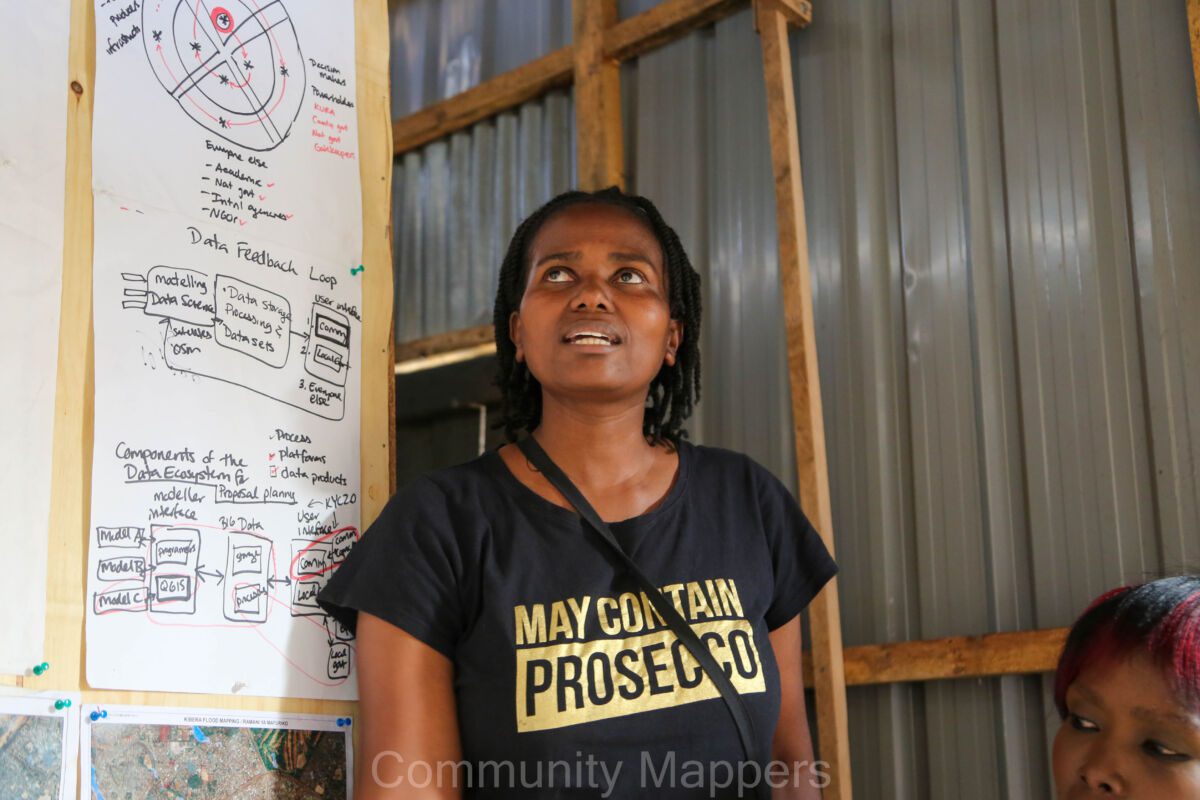
For example, Community Mappers involves community members from the very beginning—identifying issues, designing the study, collecting data, and structuring the research. Once data is gathered, it is synthesised and validated by the community before being published and shared with relevant stakeholders.
This process ensures the data remains ‘live’—active, relevant and rooted in the realities of the people it represents. Organisations embedded within communities are often best positioned to uphold this model, ensuring that data ownership stays local and that findings are used to guide meaningful development.
Data decolonisation is not merely about storing or processing data within national borders, as often defined by legal or regulatory frameworks that restrict cross-border data flows. In practice, it goes much deeper. It is about removing the barriers that prevent access to data for those who live its reality every day.
For Community Mappers, data decolonisation means ownership. It is about making data ‘live’—not static or archived, but active, accessible, and applied in designing interventions and informing real-world decisions.
‘Decolonisation is also about localisation,’ says Val, a passionate development practitioner. ‘It means making data digestible and usable by the very communities from which it is sourced. It also means involving them in validating the findings and ensuring they are informed. That way, they can confidently cite this information in public forums, hold leaders accountable, and make informed choices when electing their representatives.’
Unlike the long-standing norm where scholars collect data, publish their findings, and rarely return to validate or share results with the communities involved, there is now a growing recognition of the need to make data accessible to those communities.
While we have not yet fully arrived at this ideal, local initiatives like Community Mappers offer hope. They signal meaningful progress toward more inclusive, transparent, and community-centred approaches to data use.

Leave a Reply