Democratic Republic of Congo: Nudging a UN mission
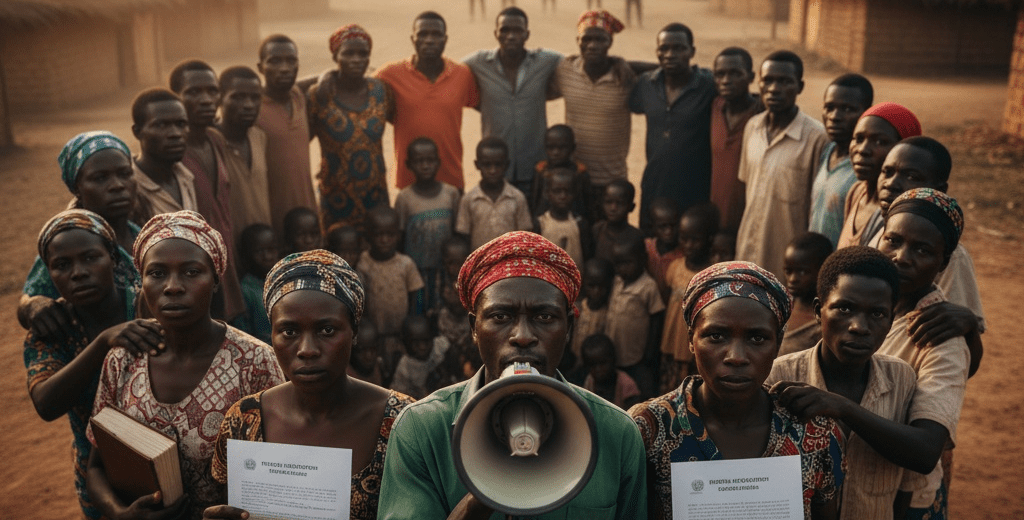
Eastern Congo’s wars have outlived generations and peacekeeping missions alike. But as the UN mission faces another uncertain renewal, local researchers and advocates are finding new ways to be heard—from Kinshasa to New York. Their influence helped shape Resolution 2765, proving that even in the world’s longest-running conflict, diplomacy still has a local address.
This October marks the third decade of war in the eastern Democratic Republic of Congo (DRC). By all measures, this region has endured some of the world’s most devastating armed conflicts—millions killed, millions more displaced (often multiple times), widespread human rights violations, especially gender-based violence of exceptional brutality, and environmental destruction on an immeasurable scale.
For twenty-six of those thirty years, United Nations peacekeepers have been part of the landscape. The first mission, MONUC—the United Nations Organisation Mission in the DRC—was established in November 1999. In July 2010, it transitioned into MONUSCO, the United Nations Organisation Stabilisation Mission in the DRC.
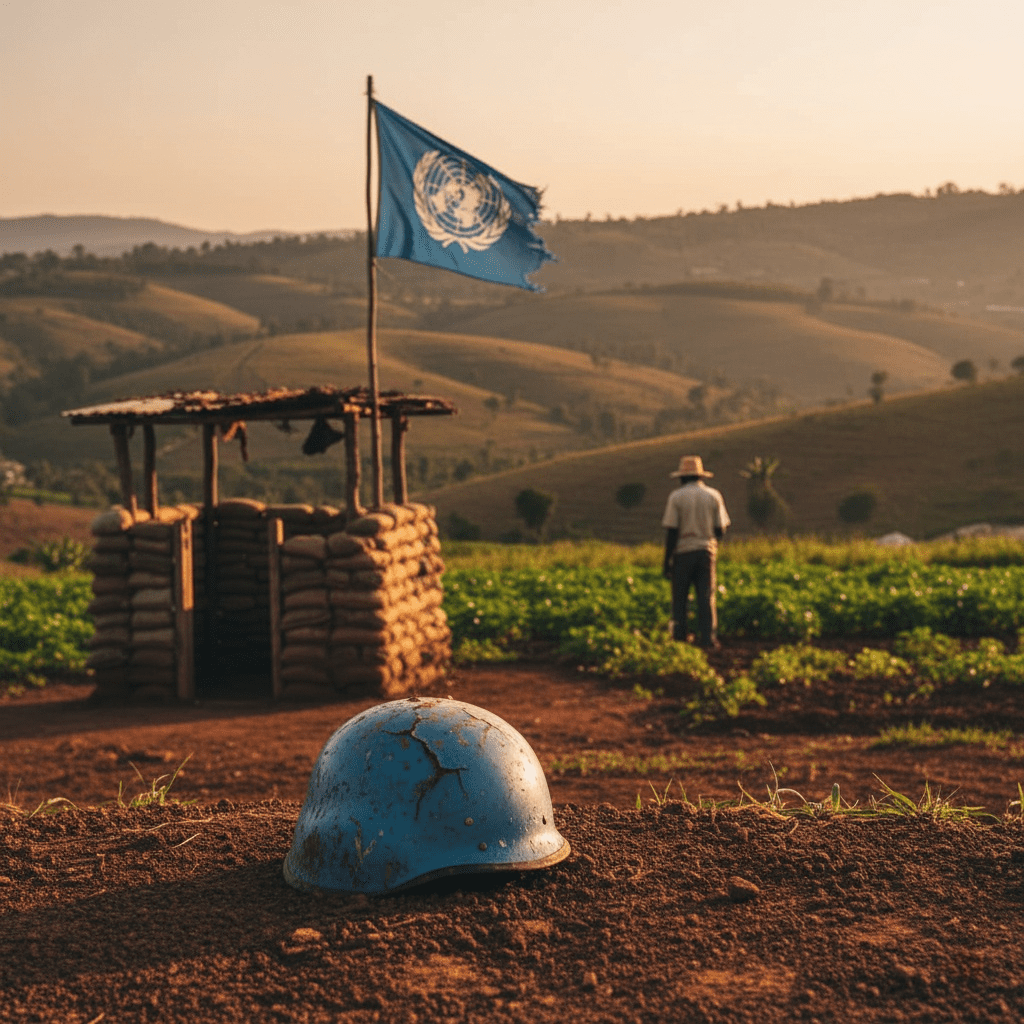
By the early 2020s, frustration among Congolese civilians over the UN’s limited protection gained political traction. Sensing an opportunity, politicians amplified these sentiments, and in 2022, the process of MONUSCO’s withdrawal began.
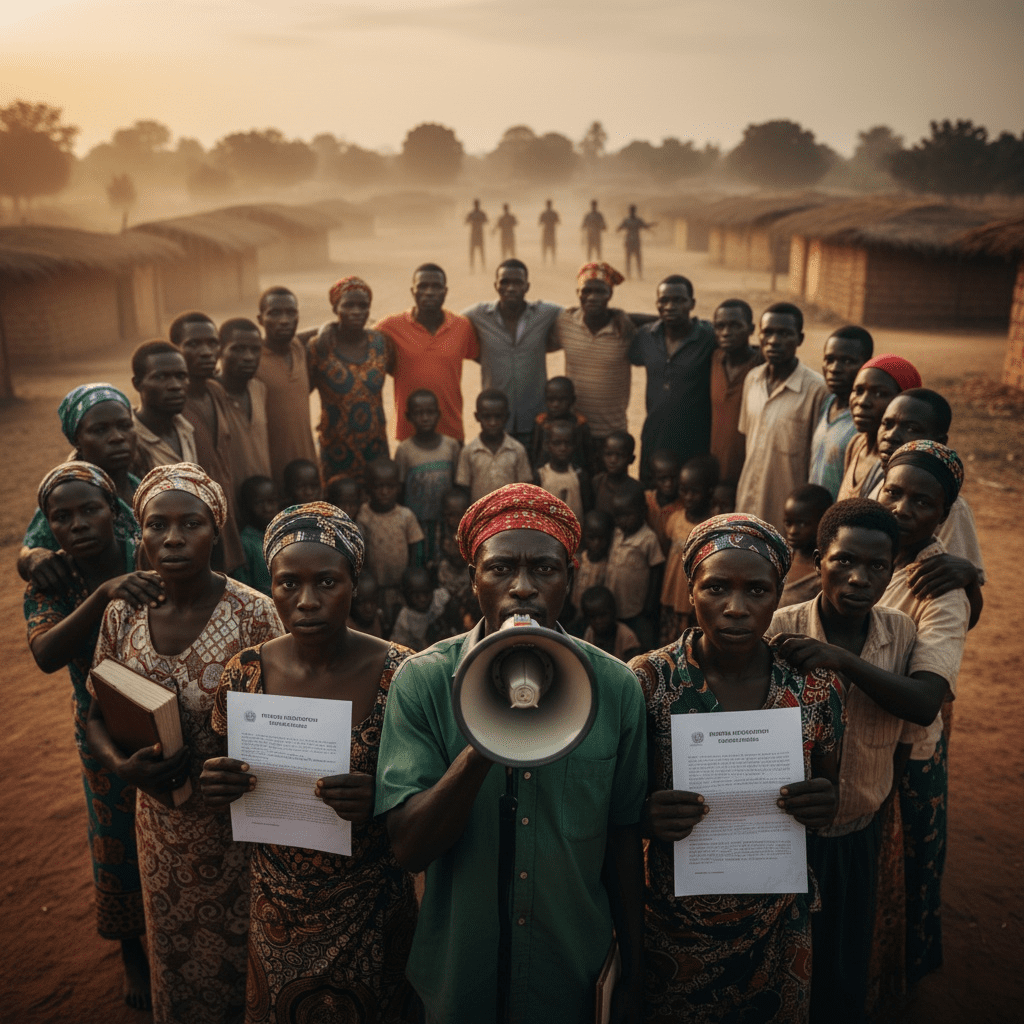
In July 2024, however, that process was paused, as the ever-present armed groups filled up the space the UN blue helmets had vacated. Emmanuel Kabengele, a researcher and National Coordinator of the Africa Security Sector Network (ASSN), describes the process as ‘hasty. It felt, and still feels, like a race against time. The South Kivu office has already closed, and we are witnessing the re-emergence of armed groups.’
ASSN has extensively studied the impact of MONUSCO’s withdrawal from South Kivu. Jair van der Lijn, Director of the Peace Operations and Conflict Management Programme at the Stockholm International Peace Research Institute (*SIPRI), offers this assessment:
‘The push to remove MONUSCO was entirely tied to the 2022 legislative elections. Once those were over, politicians turned around and said, ‘We still have conflicts—let us not send them away just yet.’’
The upshot of it all: South Kivu today no longer has a MONUSCO presence, and its capital is now in the hands of a foreign-backed armed group, M23. This may or may not have happened regardless.
However, as Van der Lijn notes, while MONUSCO was still in place, there existed at least some semblance of administrative structure. That, too, is now gone. Although MONUSCO’s withdrawal process is expected to resume at some point, the question remains—how?
The answer lies thousands of miles away in New York, where the UN General Assembly deliberates on peacekeeping missions and the UN Security Council (UNSC) determines their mandates. These mandates define what a UN mission can and cannot do and are renewed annually.
Anyone seeking to influence the direction of a mission’s next mandate—wishing to nudge the Mission, if you like—must be in New York. In MONUSCO’s case, the language of the renewal resolution must prioritise the protection of civilians, emphasise local solutions, elevate the role of civil society, and ensure that Security Sector Reform (SSR) remains central to the mission’s mandate.
Kabengele knows the SSR inside out. ‘It is a vast work in progress. We inherited a multitude of armed groups alongside the national armed forces. These now need to be transformed into a professional sector where the army, police, intelligence services, and justice system each have a clear role. And this must be done in a way that earns the public’s trust.’
Even the task of forming a coherent army with a unified command-and-control structure is daunting enough—and, as Kabengele readily admits, this is only partially underway.
‘Some of these armed groups do not even want to leave their localities. They want to continue as before. Yet SSR lies at the very heart of what the DRC needs, and at the heart of what remains of the MONUSCO mission.’
To move this forward, local, national, and international NGOs formed a consortium called Just Future, which began in 2023 to engage key actors (government representatives, diplomats, and policymakers) in Kinshasa, Brussels, and New York.
The goal was clear: to ensure that crucial issues such as civilian protection, the role of civil society, and locally driven solutions are reflected in the language of MONUSCO’s mandate renewal resolution, voted on each December. Our focus now turns to the 2024 effort.
Teodora Nguen is the security and justice expert for Cordaid, the lead organisation in the Just Future Alliance. She brought her Brussels experience into the new consortium. ‘Before joining Cordaid, I worked for four years on the Great Lakes Region with the Europe-Central Africa Network (EurAc) in Brussels.
‘One of the key things you learn there is how the European Union works. So, I had both an advantage—and a reputation—coming from a network of 33 organisations that built real recognition in the art of advocacy.’
And doing so in a large international body, which—like the UN—is often seen as unwieldy and immovable. One of the most powerful tools for advocacy today is the internet. ‘We are very connected now,’ one participant said during an online discussion for this article.
Information flows faster than ever before. ‘In fact,’ Nguen adds, ‘we can now have far better and more nuanced analyses because we receive input directly from the field.’ This connectivity also removes an old excuse: communication breakdowns can no longer be blamed when progress stalls.
The finger can now point squarely at the real culprit—a lack of political will. Yet, political positions can move—and be moved. In the case of MONUSCO, advocacy involved continuous diplomatic engagement.
Alongside numerous personal contacts, there were also formal settings—such as the June 2024 Round Table in Kinshasa, hosted by the Dutch Embassy—where key UN Security Council representatives met with local civil society representatives and familiarised themselves with ASSN’s research findings.
Nguen explains: ‘As advocacy groups, you have to be credible, useful, and relevant. You must be able to answer the question diplomats and bureaucrats will always ask—implicitly, of course: why should I talk to you? Above all, you must build trust.
‘Without trust, nothing moves. That means listening carefully and avoiding antagonism toward the people you need. I always take a personalised and constructive approach. You need to put people at ease. Diplomats are allies; they can get things done for us. So, you must know the people you want on your side.’
‘Once trust and rapport are established,’ Nguen continues, ‘I create the space people need to talk.’ And that means one thing: meetings. ‘I open them, use icebreakers, provide structure, and when we’ve shared our recommendations, I always ask if our guests have any for us.’ Reciprocity, and again, trust.
If this sounds like an extraordinary amount of preparation for an endless series of meetings in different places, you would be right. But without the willingness to invest that time and effort, advocacy simply does not work.
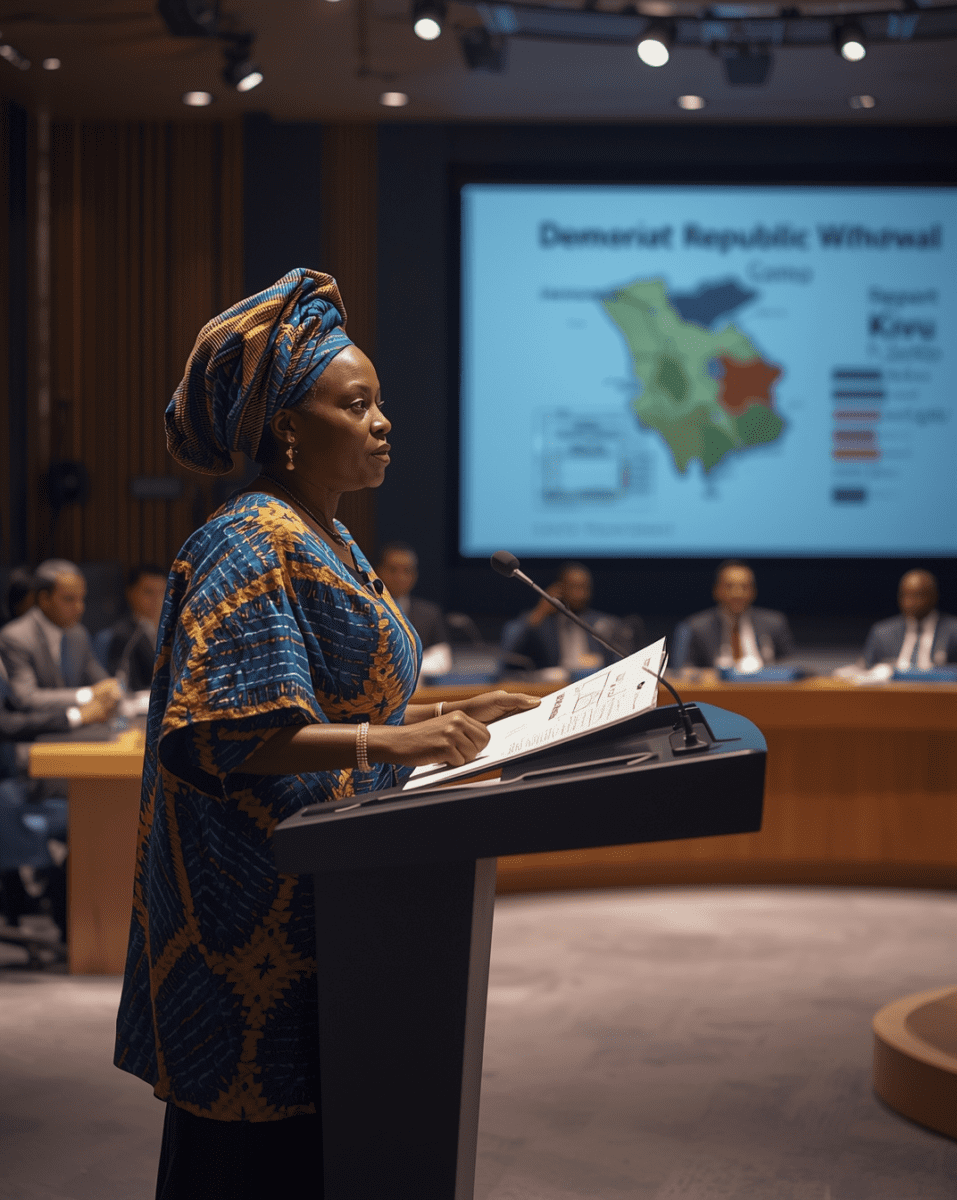
The October 2024 Round Table at the United Nations in New York—widely regarded as a success and a key influence on the final text of the MONUSCO mandate renewal resolution—was the culmination of that careful groundwork.
Many UN Security Council representatives attended, including most of the so-called Big Five (the United States, China, Russia, France, and the United Kingdom). A special effort was made to ensure the participation of the Congolese delegation, achieved through the coordinated engagement of an all-African team with strong connections to the Congolese leadership. It worked.
At the Round Table, ASSN presented its report on the impact of MONUSCO’s withdrawal from South Kivu, using it to argue for maintaining the mission’s presence in North Kivu and Ituri.
SIPRI followed with its analysis of the mandate renewal process, highlighting how MONUSCO’s eventual withdrawal could be made sustainable by prioritising Security Sector Reform (SSR) and the protection of civilians.
The most powerful moment came when Claudine Tsonga, director of the Congolese women lawyers’ collective Dynamique des Femmes Juristes, shared her experiences. Based in Goma, her presence in New York brought an authentic, first-hand perspective from the ground to a global audience.
All of these contributions fed into what ultimately became Resolution 2765. A close reading of the text reveals SSR and the protection of civilians placed prominently at its core—and the role of civil society is mentioned nine times, three times more than in the previous resolution.
Emmanuel Kabengele confirms the success. ‘We went to New York in 2024 to help place SSR, the protection of human rights, and the role of civil society at the heart of MONUSCO’s withdrawal plans. It was necessary, and I think it has worked.’
If anything, the Round Tables showed the effectiveness of linking lived experiences at the local level with the global diplomatic scene that makes decisions affecting those local communities.
However, we are not there yet. ‘We still have more to do to position Just Future as a key civil society actor,’ Nguen acknowledges. This is not to downplay what has already been achieved, but rather to encourage continued effort from a consortium that is still young and finding its footing.
On Cordaid’s role within this effort, Nguen offers candid advice: ‘Cordaid needs to be more forceful in shaping the agenda. We are not leading; we are participating. The job of INGOs is to amplify the voices of communities and local or national NGOs—because without them, those voices go unheard. Make their voices heard.’
In essence, INGOs serve as a window through which the world can see realities on the ground. But, as Nguen suggests, that window should not distort the view. Civil society itself is diverse, and some actors think beyond conventional boundaries. As Van der Lijn observes, ‘There is a sizeable group among civil society organisations that insists MONUSCO must leave entirely, believing that only then will state authorities finally be compelled to act.’
This raises an old but persistent question: why are governments more accountable to donors than to their own taxpaying citizens? But that, perhaps, is a discussion for another day.
Of course, friction is inevitable within a diverse consortium like Just Future. ‘Local civil society does not always see the value of pragmatism,’ Nguen notes wryly. ‘And there are tensions with international NGOs, which still need to learn humility.
‘Much of what they contribute is constructive and relevant, but they often operate at ‘higher,’ more abstract levels.’ The underlying message is clear: both perspectives are essential.
Resolution 2765 passed on 20 December 2024. Two weeks later, the rebel group M23 bulldozed its way toward two provincial capitals—Goma in North Kivu and Bukavu in South Kivu—seizing at least one lucrative tantalum mine and making MONUSCO’s operations increasingly difficult.
As Kabengele put it, ‘It all went very fast. They made their move, aided by the highly sophisticated weaponry that Rwanda provided. We’re now facing an enormous increase in insecurity.’
By the end of that month, Donald Trump’s trademark transactional style of governance had re-emerged in Washington, D.C., and wasted no time. His administration’s sights were set on the DRC’s mineral wealth.
After reportedly preventing another valuable tantalum mine from falling into M23’s hands through direct negotiations with Rwanda, the U.S. began pursuing stakes in lithium, copper, and cobalt.
The architect of this new scramble is the U.S. Special Envoy to the DRC, Massad Fares Boulos—a businessman whose son, Michael, is married … to Tiffany Trump. So where does that leave Resolution 2765?
Van der Lijn offers this assessment: ‘Basically, the mission has the same objectives. But it is fair to say that, under the current circumstances, MONUSCO has little room to manoeuvre.’
As if to underscore his point, Bintou Keita, the Special Representative of the UN Secretary-General and head of MONUSCO, reported in June that regular troop rotations could still not be carried out because M23 continued to keep Goma Airport closed.
MONUSCO’s mandate is due for renewal at the end of 2025. In principle, Just Future should be able to build on the momentum it created last year for a renewed advocacy effort.
But Nguen sounds a note of caution, given the stance of the new U.S. administration and its hostility toward migrants and foreign visitors. ‘I’m not sure I would want to take our African partners to New York again. It’s not safe.’
Even for such an important mission, she argues, it would be unconscionable to expose members of the Just Future Alliance to the risk of being detained by U.S. Immigration and Customs Enforcement (ICE).
‘We are not too optimistic,’ admits Kabengele. ‘It feels more like we’re all trying to safeguard the absolute minimum. Our biggest challenge is that we are living in both a post-conflict and an active conflict situation—especially in the eastern part of the country. And there’s fatigue; everyone is tired of it.’
Everyone, that is, except the fighters and their backers. Still, Kabengele Kalonji adds a glimmer of hope: ‘At least there are talks,’ he says, referring to ongoing mediation efforts by the East African Community, the Angolan government, the Vatican, and Qatar. ‘So, we may yet maintain some hope.’
Is it all worth it? Van der Lijn is pertinent. ‘You have to see these efforts in context. We nudge things gently in the right direction — influencing UN Security Council decisions through meetings shaped by ASSN and SIPRI studies, and bringing actors outside the usual diplomatic circles to the table. It’s cost-effective.’
He adds: ‘After all, Resolution 2765 is a significant achievement, considering the strong pushback within the UNSC against human rights, the rule of law, and civil society influence — not only from Russia and China, but also from some African governments, and now even the USA.’
Kabengele concurs. ‘What we do has an impact — even at the level of the UNSC, and also within the Congolese government, which would otherwise not be open to creating space for civil society. So, we continue to believe in what we do. Because if these years of war have shown anything, it’s that there are limits to what arms can achieve.’
Leave a Reply