
Faith as Infrastructure: Reflections from a Webinar on the Role of Faith in Development
Faith has long occupied an ambiguous place in development debates. In practice, religious institutions organise communities, mediate conflict, mobilise youth, and sustain social trust. In policy conversations, however, faith is often treated cautiously—acknowledged as influential but rarely embedded within development frameworks. The Faith in Development webinar convened by Vice Versa Global sought to interrogate this gap, asking what it might mean to take faith seriously not as charity or belief alone, but as part of the infrastructure shaping social and economic life.
Text: Faith Jwenge
Bringing together young leaders, development practitioners, and faith actors, the conversation quickly moved beyond the question of whether faith belongs in development. The deeper issue was structural: if faith already shapes communities in practice, why does it remain largely peripheral in development strategy and institutional design?
For decades, dominant development thinking has treated faith as background noise — acknowledged politely, sometimes cautiously, but rarely embedded intentionally. Yet across towns, villages, and informal settlements, faith actors run schools, organise food programmes, mobilise youth, mediate conflict, and shape social norms.
Faith is not a footnote in community life; in many contexts, it is the backbone. The contradiction is stark: faith is everywhere in practice, yet almost invisible in policy language, planning frameworks, and governance conversations.
What emerged during the webinar was not an argument for religion, but a reframing of faith as something structural rather than sentimental. Faith was presented not as charity or private belief, but as infrastructure — social, moral, and civic. Infrastructure that builds trust, sustains resilience, and shapes how people relate to power, money, institutions, and one another.
One of the most compelling ideas to surface was that development is not only about constructing systems or distributing resources. It is also about persuading people to believe in institutions, leadership, and the possibility of change.
Roads can be built and policies drafted, but without trust, they remain hollow. In this sense, faith operates as a form of social currency. It enables collective action, sustains participation through uncertainty, and anchors hope in contexts where state systems are often fragile or absent.
At the same time, the conversation was honest about the risks inherent in faith. Faith can empower, but it can also exclude. It can inspire justice, but it can also be manipulated to legitimise inequality, silence dissent, or consolidate power.
The webinar did not treat faith as automatically virtuous. Instead, it posed a more demanding challenge: how can faith-based actors move from being implementers of projects to co-architects of systemic change, and what accountability must accompany that shift?
Throughout the discussion, youth emerged as a central lens through which this question was explored. There was a shared recognition that young people are not merely beneficiaries of development but carriers of energy, imagination, and momentum. Without youth, institutions stagnate. Without a strong ethical foundation, young people risk becoming disconnected from their sense of purpose.
Moral Foundations
Dr Titus Oluoch Okoyo, a leadership and institutional management expert and Principal at the Kenya YMCA National Training Institute, spoke about how faith-based spaces shape young people not only through skills training but through character formation. In his framing, vocational training without values produces competence without conscience.
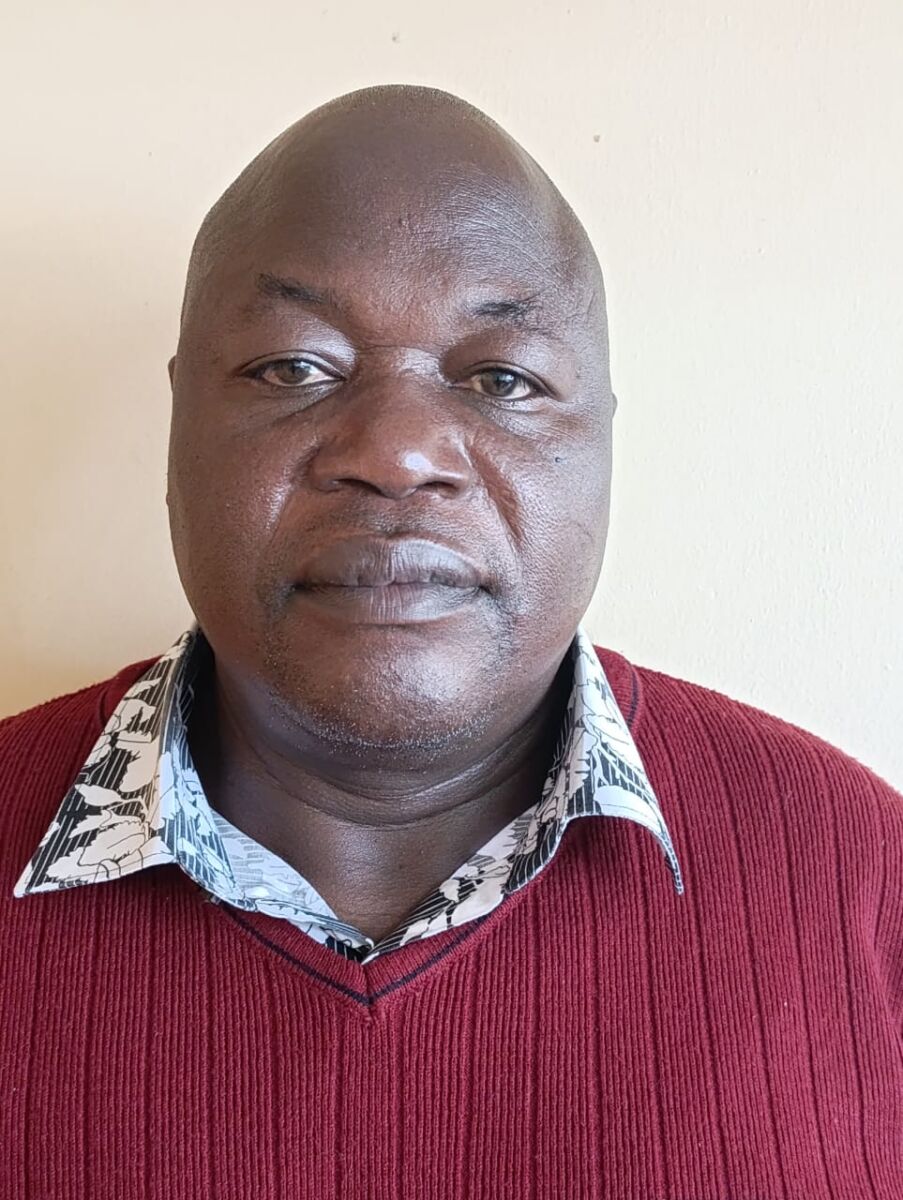
Integrity, professionalism, and ethical discipline must be cultivated alongside technical ability if empowerment is to be durable. Faith institutions, he argued, serve as custodians of these moral foundations, preparing young people not just for work, but for leadership.
What struck me was the insistence that inclusion must go beyond symbolism. Youth cannot be invited merely to occupy seats or participate in events; they must be trusted with responsibility and decision-making power.
With young people forming a majority in many faith communities, their exclusion from leadership is not only unjust but strategically unsustainable. Faith institutions that fail to integrate youth perspectives risk losing relevance, legitimacy, and continuity.
The phrase “moving from the pulpit to development” powerfully captured this shift. Faith cannot remain confined to sermons while communities grapple with unemployment, mental health challenges, and digital transformation.
Literacy today is not limited to sacred texts; it includes technology, entrepreneurship, and emerging tools such as artificial intelligence. Faith institutions that fail to engage these realities risk detaching themselves from everyday life.
The webinar also warned against losing spiritual grounding in the rush to modernise. Development without values becomes transactional. Faith without action becomes hollow. The task, therefore, is not to replace faith with development, but to integrate the two in ways that are ethical, accountable, and human-centred.
This integration became particularly clear in discussions on entrepreneurship and innovation. Fumbwe Hamisi, a Kenyan tech entrepreneur and co-founder of Nilltech Solutions, reflected on how faith can function as a foundation for ethical innovation in business and development.

He spoke about faith not as a retreat from modernity, but as a foundation for ethical innovation. In his view, values such as fairness, integrity, and accountability are not barriers to business; they are stabilising forces. An enterprise guided by moral conviction becomes a site of dignity rather than exploitation.
There was also an acknowledgement of the tension faith introduces in professional and economic spaces. Entrepreneurs who openly ground their work in faith often encounter scepticism, with belief dismissed as irrational or incompatible with innovation.
Yet, this tension reveals a deeper misunderstanding: belief systems shape culture, and culture influences outcomes. Development strategies that ignore cultural and faith contexts risk failure, regardless of their technical sophistication.
Women’s economic inclusion added another critical dimension to the conversation. Faith Gatwiri, a Kenyan entrepreneur and advocate for women’s empowerment, discussed how faith can enhance women’s economic agency and leadership.

Gatwiri framed empowerment not as charity, but as a strategy for independence and agency. When women are equipped with financial literacy, technical skills, and access to capital, they are better positioned to make decisions, reduce dependency, and challenge restrictive norms.
Faith, in this context, was described as a source of resilience. It fosters patience, discipline, and optimism — qualities essential for navigating entrepreneurial risk and systemic barriers. Empowerment was not presented as a linear movement from poverty to wealth, but as a transformation of identity: from perceived “victims’ to confident actors capable of shaping their own futures. This shift is psychological and spiritual as much as it is economic.
The speakers were clear that inclusion must be intentional. Gender equity does not happen by accident. It requires supportive policies, access to resources, mentorship, and institutional commitment. Faith communities, with their moral authority and influence, were urged to promote equity instead of perpetuating silence or hierarchy.
Systems Thinking
The conversation then turned decisively toward systems and what it truly means to speak of faith as infrastructure. Systems, as described in the webinar, are not isolated projects or one-off interventions. They are the institutional arrangements, policies, norms, and governance mechanisms that determine how resources flow and decisions are made.
Mbereshia Alukwili illustrated this through the lens of operational excellence. Connecting farmers, schools, and families into accountable food systems was framed not just as logistics, but as a matter of justice in action. When procurement is transparent, when quality is monitored, and when delivery is reliable, dignity is restored. Farmers gain stable markets. Children receive meals. Communities become participants rather than dependents.

This is where the meaning of “systems’ becomes sharper. Structural embedding means that faith actors do not remain on the margins as project implementers, but move into spaces where policy, procurement, and institutional rules are shaped. It means influencing how budgets are allocated, how standards are set, and how accountability is enforced. It is the shift from charity to governance, from service delivery to institutional transformation.
This system’s lens also exposes the unavoidable question of power. The webinar confronted the political misuse of faith, particularly in contexts where religious language is deployed to legitimise authority, suppress critique, or mobilise support without accountability. Faith, when entangled uncritically with power, risks becoming a tool of control rather than a force for justice.
Here, the church’s watchdog role was reasserted. Faith institutions, the speakers argued, must retain the moral courage to challenge injustice rather than align with it. They must speak truth to power, not sanctify it. This requires distance from political capture and a commitment to ethical consistency.
Internal accountability within faith institutions was also emphasised. Transparency, ethical leadership, and alignment between values and actions are not optional. Communities, especially young people, are acutely sensitive to hypocrisy. Faith that is publicly professed but privately contradicted loses credibility rapidly. The generational demand is not for perfection, but for honesty and integrity.
Leadership, therefore, emerged as a defining theme. Faith-driven leadership was consistently framed not as dominance, but as service. Servant leadership prioritises collective good over personal gain, addresses community suffering honestly, and anchors authority in justice rather than control. Excellence, in this sense, is an ethical discipline in how leaders treat employees, congregants, clients, and beneficiaries.
Power and Accountability
A central question shaped this reflection: What kind of faith-driven leadership serves as a tool for unity rather than division?
The responses focused on three key themes: accountability, inclusion, and awareness. Faith leadership must expand our understanding of justice rather than narrow it. It must be transparent rather than performative. In an era of declining institutional trust, credibility is built through consistency between values and action.
The interfaith dimension of this work was also made explicit. Cooperation across religious lines, particularly in shared economic, youth, and civic initiatives, was described as a powerful mechanism for building trust structurally. When faith actors collaborate around common goals such as feeding children, empowering women, or supporting young entrepreneurs, belief becomes a bridge rather than a boundary. Interfaith action shifts faith from an identity marker to a social glue, strengthening cohesion in plural societies.
As the session drew to a close, the wider social context came back into focus. Participants acknowledged the complexity of integrating faith and development in environments shaped by political manipulation and historical distrust. Yet the consensus was clear: faith and development can coexist without corrupting each other — but only if both are held to standards of justice, accountability, and institutional responsibility.
What I took away from the webinar is that faith is already shaping development outcomes, whether we acknowledge it or not. The real question is whether it will do so consciously, ethically, and inclusively.
To treat faith as infrastructure is to recognise its power to mobilise trust, sustain resilience, and frame moral choices within institutions and governance systems. It is to see belief not as an obstacle to progress, but as one of its hidden engines. When aligned with justice, accountability, and transparency, faith becomes more than private conviction; it becomes a public good.
In this vision, youth are not afterthoughts but architects. Women are not marginal participants but economic actors. Entrepreneurs are not neutral regarding values; they are grounded in ethical principles. Communities are not recipients but co-designers. Leadership is not domination, but service.
The webinar did not offer easy answers. It offered a more urgent question: what would development look like if it took seriously the beliefs that already shape people’s lives and embedded them responsibly within systems of governance and institutional accountability?
That question now belongs not only to faith leaders, but to policymakers and development actors tasked with shaping our collective future.

Leave a Reply