Where Women Were Once Excluded, One Now Leads
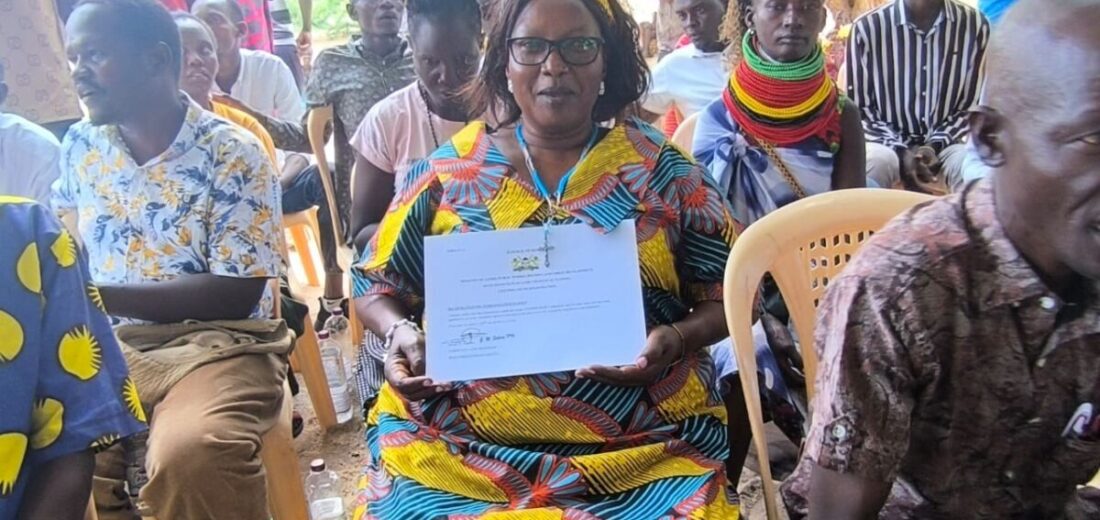
In Turkana County, where land decisions have long excluded women, Veronica Lotesiro now leads them. As chair of a legally mandated land committee, she oversees decisions on ownership, disputes and community rights—demonstrating how legal reform, when locally enforced, can shift power and bring women into the centre of governance.
She calls the meeting to order, signs official documents and mediates disputes over land that stretches far beyond the village, functions that, until recently, women in Turkana were rarely allowed to perform.
“I knew it would not be easy,” she says. “But the land belongs to all of us.”
From the margins to the table
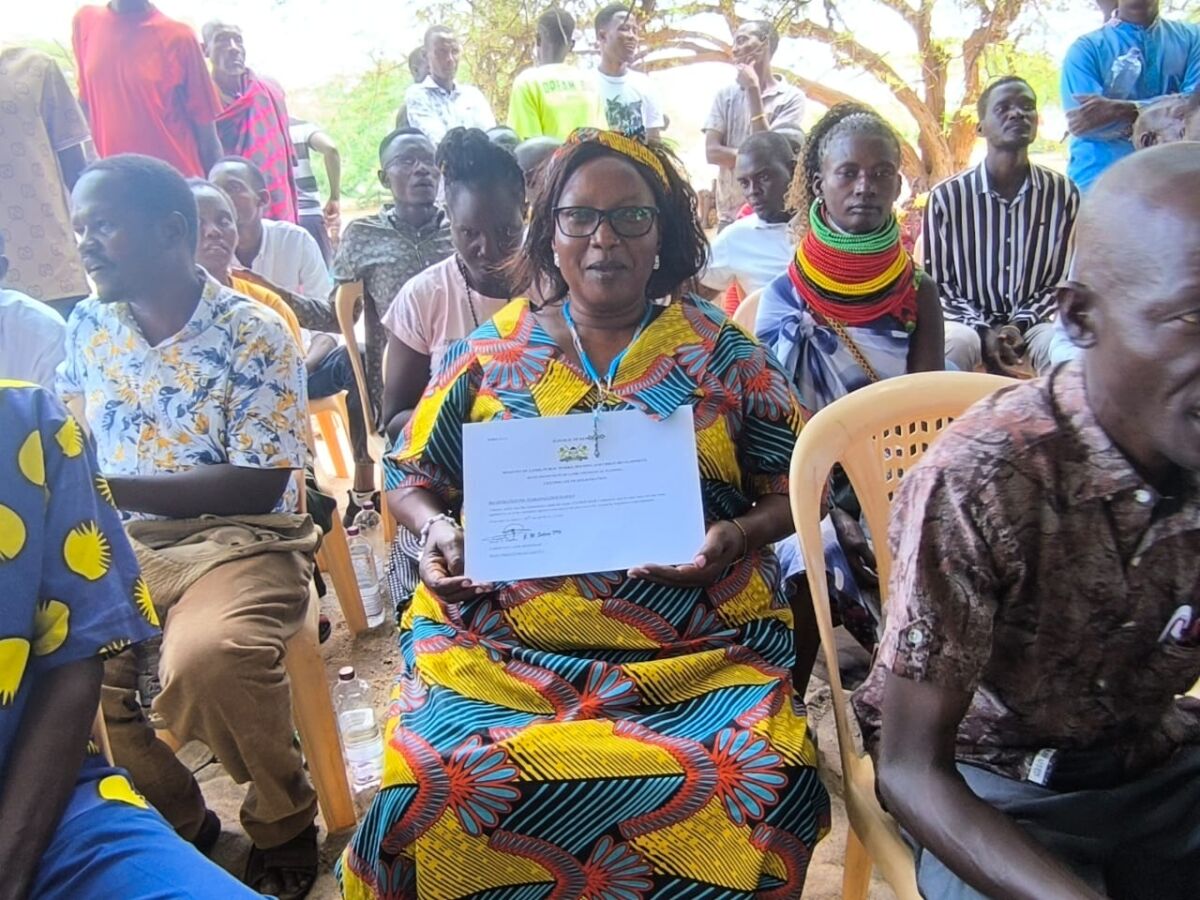
For most of her life Veronica watched land meetings from the margins. Decisions were made under trees and in elders’ councils; land was surveyed, sold or allocated and women were rarely consulted, even though they raised families and worked the land. “In the past, women were just told what had already been decided,” she says. “Even when it affected our children, we had no voice.”
That began to change when the Lokichar CLMC was established and formally registered under the Community Land Act. The committee formed in line with the Community Land Act 2016 and the constitution’s two‑thirds gender rule, counts fifteen members, four of them women. Veronica emerged as chair after a contested selection process, and her leadership has become a visible exercise in shifting local power.
“Some people questioned why a woman should lead land matters,” she recalls. “But they had to accept the reality.”
From exclusion to agency
Today, when Veronica opens a land meeting and signs the minutes, she is not only administering a process, she is modelling a new politics in Turkana: women who claim, document and defend collective rights.
Her leadership is a testament that legal reform can matter when combined with organised evidence, public participation and relentless political pressure.
“The land belongs to all of us,” she says. “If we don’t protect it, who will protect our children’s future?”
Legal architecture and the political room
The Community Land Act gives communities the right to hold, manage and protect communal land; Article 60 of the Constitution demands equity and freedom from gender discrimination; Article 63 recognises community land.
Veronica and the CLMC have used these legal tools as both shield and leverage. They have turned legal recognition into a set of practical actions: by registering the community, developing bylaws, drafting sketch maps and keeping detailed minutes. The CLMC has reframed land questions as matters of public administration rather than private bargaining.
On 14 November 2023, Lokichar received its Community Certificate of Title, marking a formal milestone that Veronica and the committee treat as both protection and political capital. “The certificate means our land cannot be sold behind closed doors,” she says. “It means the county and investors must consult us.”
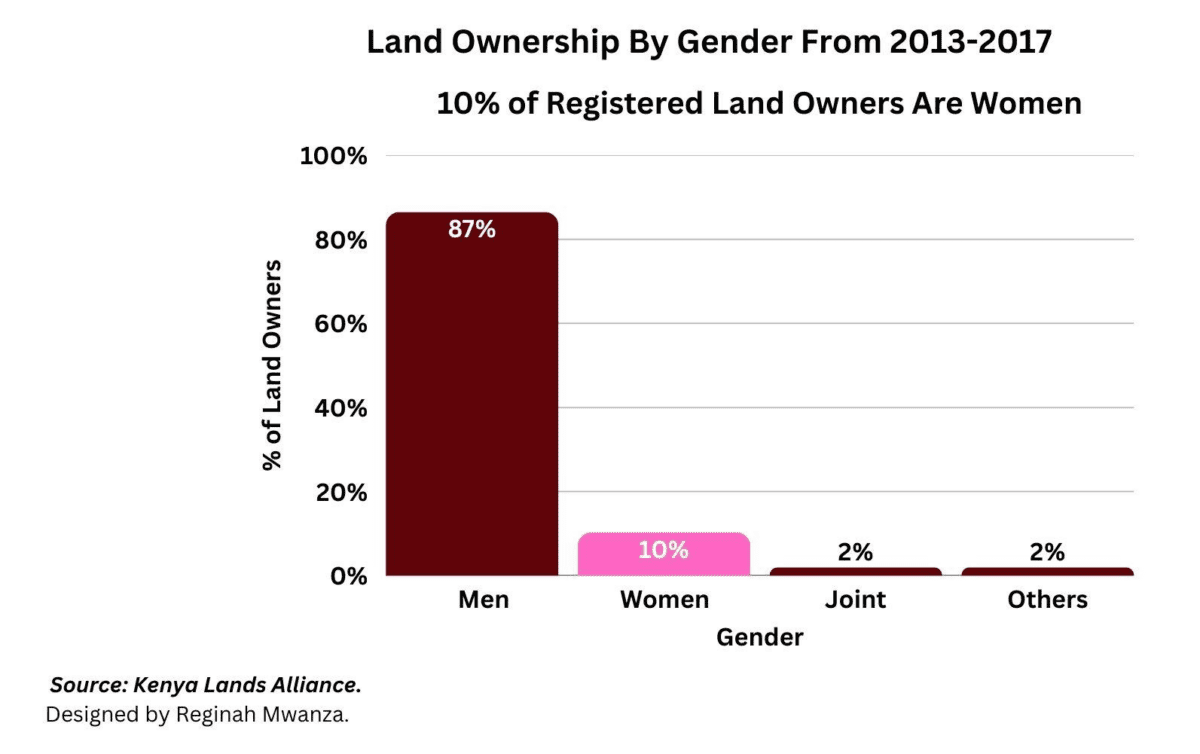
The CLMC rewired local participation. Barazas became the forum for consultation; women began to attend in larger numbers and to speak openly about inheritance, boundaries and planned land sales. CLMC records show that attendance at community barazas rose to more than two thousand after registration began, compared with fewer than twelve hundred beforehand.
Today, widows are challenging decisions made without their consent and mothers are asking how land would be protected for future generations.
Those civic shifts have had practical effects. Local records reported to the assistant chief indicate land dispute incidents in Lokichar have declined since the CLMC began operations, even as pressure on land rose because of oil exploration and development projects nearby.
“Disputes were once common. Now they are fewer,” the assistant chief says, attributing the change in part to more transparent, women‑inclusive decision‑making. “Women leaders have played a key role in mediating conflicts, discouraging rushed sales and reminding the community of the long‑term consequences of losing communal land.”
From community evidence to county rooms
Veronica and her colleagues have not stop at local meetings. They have brought documented cases, bylaws and minutes to sub‑county and county offices. They have presented memoranda and evidence at public participation sessions and met officials from the Ministry of Lands and county planning units to insist that the CLMC’s authority be recognised in practice as well as on paper.
“We were not asking for favors,” Veronica says. “We showed records: who lives where, who uses which pasture, and what our bylaws require. That convinced officials to take our claims seriously.”
That political pressure has produced measurable institutional responses including routine visits by county survey teams, formal recognition of the CLMC in county planning conversations, and greater oversight of proposed land deals by sub‑county offices. The CLMC has also negotiated protocols such as informal MoUs with county officials to ensure that any private actor seeking access to land must first consult the community.
Mediating value and protecting livelihoods
Lokichar sits where land value is rising because of oil exploration. That has put pressure on customary holdings and exposed the vulnerability of households that once depended on charcoal, logging or informal sales. The CLMC has tightened controls by enforcing restrictions on destructive activities, negotiating compensation terms for community projects and vetting proposed deals to ensure communal benefit.
Those protections have costs. Restrictions on logging removed a source of cash for some women, and the committee now seeks donor and government support for alternative livelihoods and training. “We need help to replace the income that stopped when charcoal was curtailed,” says Jane Atabo, CLMC treasurer, who previously depended on firewood and charcoal sales to support her family. “The law protects land, but people also need ways to eat.”
Beyond dispute mediation, Veronica has pushed the CLMC to translate participation into institutional demands. The committee has proposed local bylaws on land use, submitted requests for budgeted support for women’s livelihood programs, and asked county committees to include CLMC needs in the sub‑county development plans. “Those are explicitly political acts: they shift land governance from customary discretion to budgeted public responsibility,” she adds.
“We present costed proposals to the county,” Veronica says. “We ask for training, seeds, alternative income support and for our participation to be part of county planning.”
The CLMC’s approach reframes women as rights‑holders demanding concrete public investment, not passive beneficiaries of charity.
Accountability, documentation and dispute resolution
A core task of the CLMC has been to professionalise record‑keeping: minutes, parcel maps, membership rolls and dispute logs. That documentation is political; it undercuts informal land captures and creates an auditable trail officials cannot easily ignore. Where disputes arise, the committee offers mediation and refers cases upwards with a paper trail, an administrative fix that raises the cost of corrupt, behind‑closed‑door sales.
“Documentation changes power,” says Jane. “When you can point to minutes and a certificate, it’s harder for someone to steal land.”
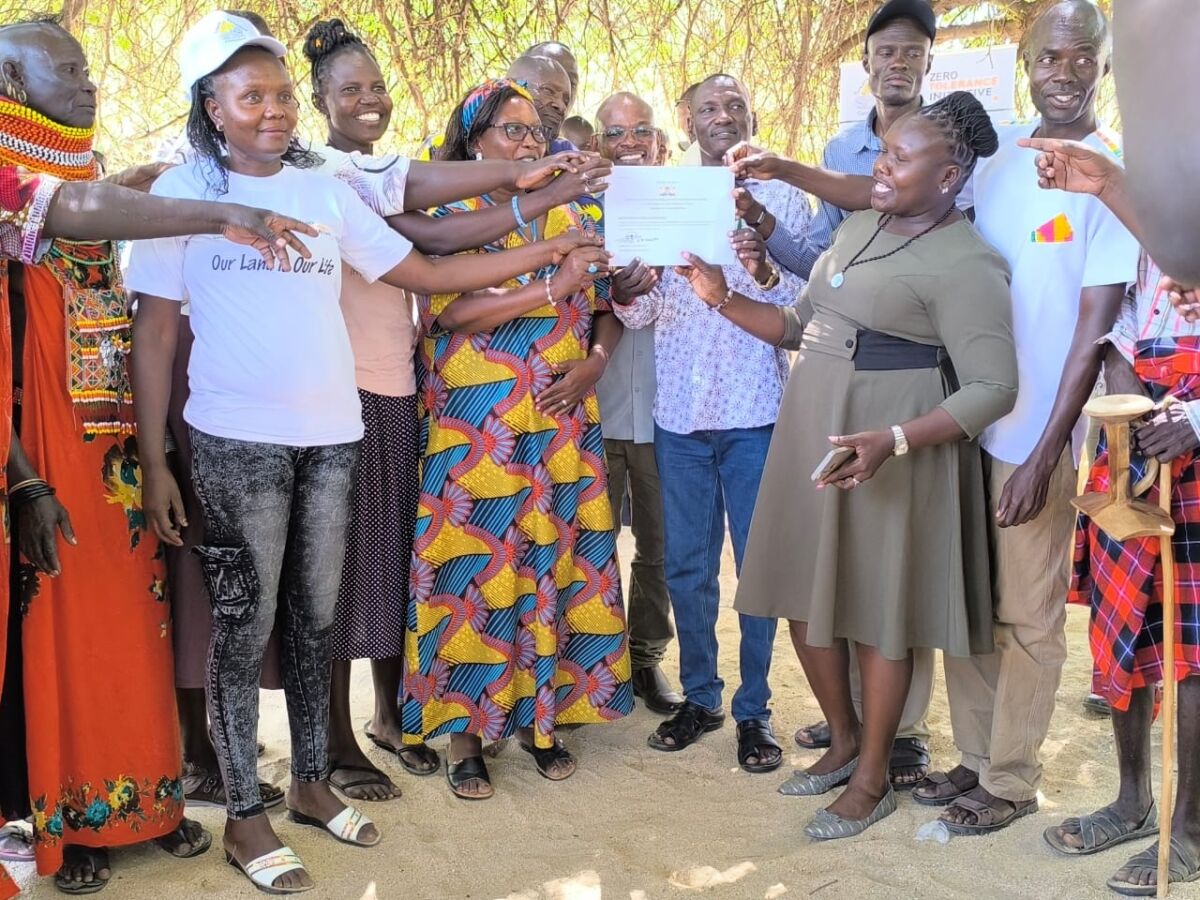
Lokichar is not unique: neighbouring Kapese and Nakukulas have also registered community land and set up CLMCs. What sets Lokichar apart is the prominence of women in leadership, a chairperson and a finance lead and the deliberate tactics they use to convert community evidence into county action.
Veronica’s role demonstrates how local leadership can scale influence: by convening barazas, documenting claims, submitting memoranda, and insisting that county planners and MCAs include CLMC priorities in CIDP discussions and budget lines.
Limits and the work ahead
Despite progress, the path is unfinished. Some CLMC rules restrict income-generating activities that previously sustained women. County budgetary support is modest and the CLMC’s requests for formal MoUs and predictable funding remain partly unmet. Moreover, the two‑thirds gender rule is a floor, not a ceiling: meaningful participation requires more than presence at meetings. It requires power to shape decisions and budgets.
Veronica and her team are clear about next steps: secure formal MoUs with county departments that guarantee consultation and referral protocols; win explicit budget allocations for community land protection and women’s livelihood alternatives; and push for county adoption of CLMC bylaws into the CIDP so that protection is sustained across administrations.
“If the county writes it into the plan and the budget, it will last,” Veronica says. “That is what we are working for.”
Lokichar’s story is a test of devolution in practice: can county institutions translate constitutional commitments into protections that survive market pressure and elite interest? The Community Land Act gives communities rights; the CLMCs make those rights operational but only if county assemblies, treasuries and planning departments convert promises into line items and enforce consultation.
If Lokichar’s certificate and committee work produce sustained county budget lines, signed MoUs and published dispute‑resolution statistics, the shift will be durable. If not, the gains remain fragile: legal title without administrative follow‑through can be contested in courtrooms or quietly undermined by powerful actors.
Lokichar’s CLMC has moved the community from being passive subjects of land deals to active rights‑holders in the county’s development conversation. That transformation from exclusion to agency is both practical and political, and it offers a template for other communities where women must be at the table if land is to protect lives as well as livelihoods.

Leave a Reply