When Justice Fails: Inside Kibera’s Fight Against Gender Based Violence
Kicker How a grassroots coordinator’s data-driven advocacy secured 15 million shillings in county GBV funding and influenced national judicial reform
When Editar Ochieng, walked into the Nairobi County Assembly’s Health Committee hearing last September, she carried more than just testimony. She brought 347 meticulously documented cases of institutional failure that would reshape how Kenya’s largest county responds to gender-based violence.
Three hours later, she walked out having convinced the committee to set aside funds to oversee the formation of shelters for GBV survivors complete with police referral systems, a counselling and a trauma unit.
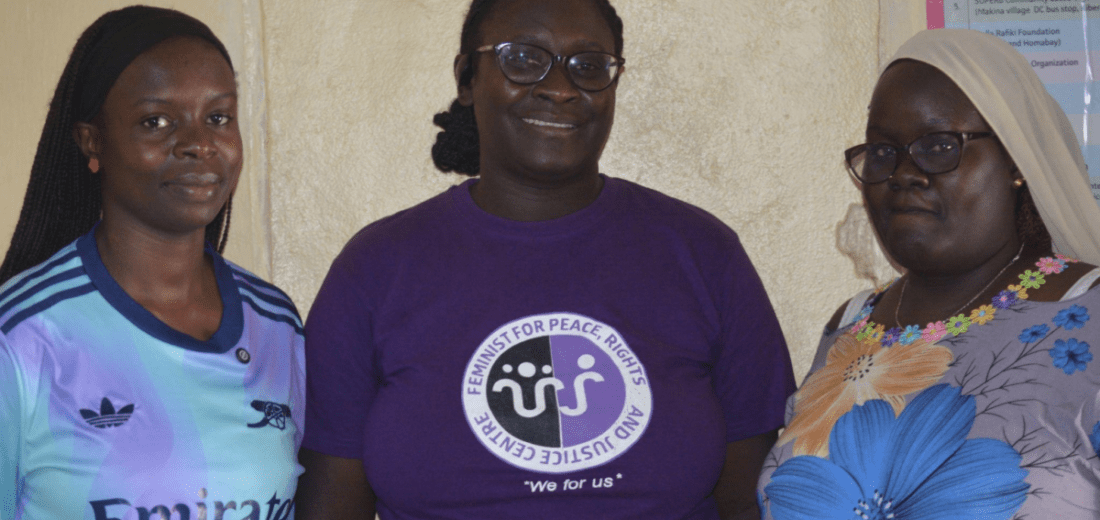
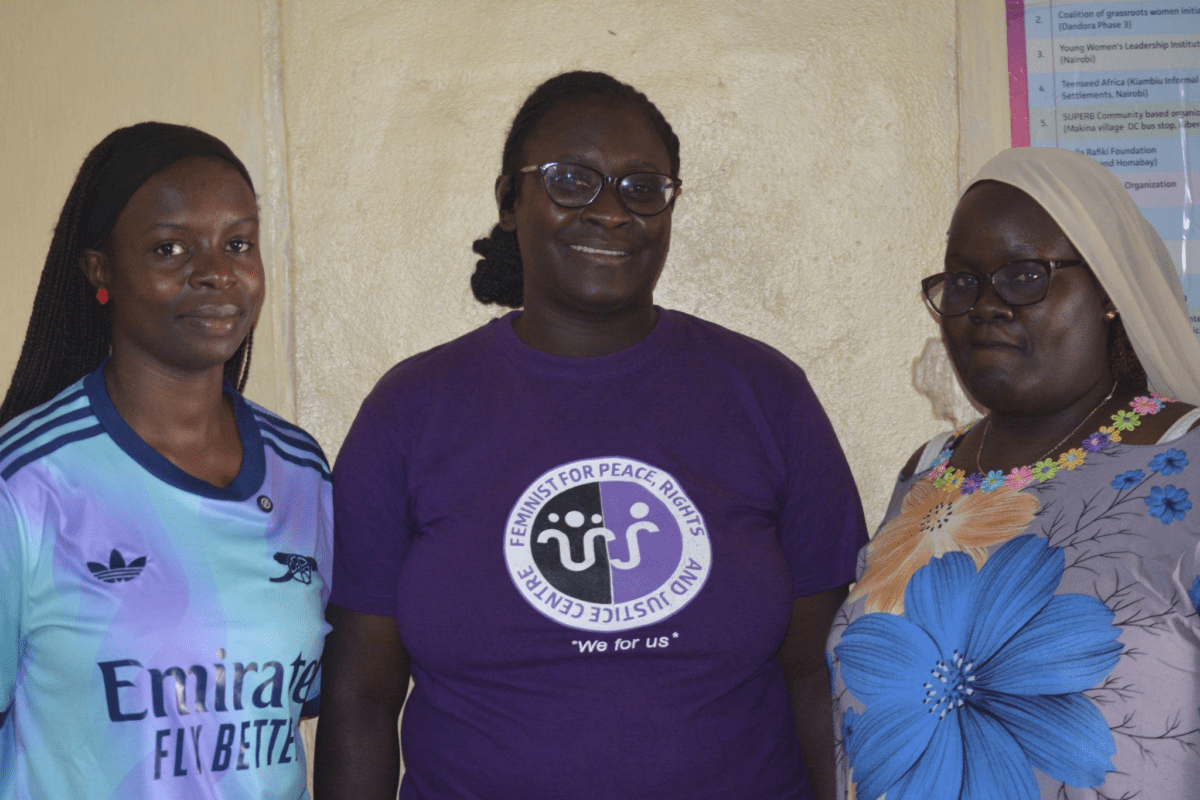
“They could not dismiss us this time,” says Ochieng, the founder of the Feminists for Peace, Rights and Justice Centre (FPRJC) in Kibera. “We had the evidence, the legal and policy commitments and the political strategy to make them act.”
The victory represents a masterclass in grassroots advocacy that leverages Kenya’s devolution framework to transform continental commitments into concrete budget allocations.
But it began with individual tragedies that expose the devastating gap between Kenya’s progressive laws and lived reality.
A report by the United Nations Population Fund (UNFPA) 2020 also shows that around 45 per cent of women and girls aged 15–49 have experienced some form of GBV in their lifetime.
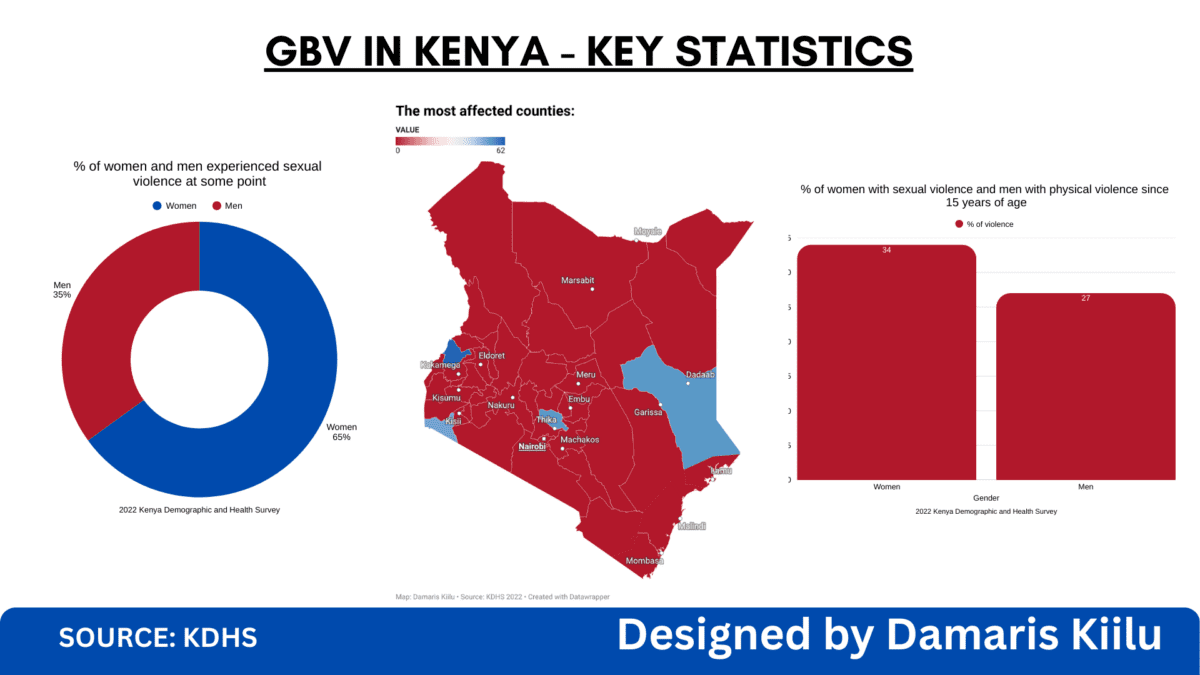
The Kenya Demographic and Health Survey, 2022 reveals that 34 per cent of women, compared to 27 per cent of men, have experienced physical violence since age 15 in Kenya. The most affected counties are Bungoma (62%), Murang’a (54%), Homa Bay (54%), and Migori counties (51%). Additionally, 13% of women have experienced sexual violence at some point in their lives, with men reporting a lower figure of 7%.
From documentation to legislative victory
Purity Wanjiku’s case typifies the systematic failures FPRJC documented. The 32-year-old mother of three survived a machete attack by her husband, only to face police coercion to “forgive” him. Eight months later, the husband walked free despite Article 28 and 29 of the Constitution of Kenya 2010 and the Sexual Offences Act 2006 criminalizing GBV.
But Purity’s story did not end with injustice. It became evidence in FPRJC’s successful campaign to reform county-level response systems.
“We track every case from initial report to final outcome,” Ruth Juliet, the programmes coordinator at the Centre, explains. She says that at the centre, they open files that detail how police respond to a GBV case, court delays, medical service gaps, and shelter availability across Nairobi’s informal settlements. “This data becomes our ammunition when we lobby for policy change.”
The strategy has proved decisive during public participation sessions mandated under Kenya’s devolution framework. When county officials claimed adequate GBV services existed, FPRJC presented documented evidence of 180 cases where police failed to investigate, 89 survivors denied medical care, and 78 women turned away from overcrowded shelters.
Building the Evidence Base
FPRJC’s documentation process extends far beyond basic case recording. Each survivor’s journey through the justice system is mapped against existing legal frameworks, revealing precise points where institutional failures occur.
Anne Mwangi’s case illustrates this approach. Raped at 14 by five men in broad daylight, she reported immediately to Kibera police station. FPRJC’s records show police took her statement but failed to open an official occurrence book entry for 72 hours, violating National Police Service protocols. No arrests followed despite Anne identifying perpetrators.

This methodical approach enabled FPRJC to present county officials with irrefutable evidence during budget hearings.
When Health Committee Chair Mary Wanjiku questioned whether police inaction justified county expenditure on GBV services, FPRJC produced documentation showing that 67% of survivors never received police follow-up, forcing them to seek alternative support.
Constitutional Leverage, Continental Framework
FPRJC advocacy explicitly weaponizes both constitutional guarantees and continental commitments. During the county assembly hearing, Ochieng did not just cite individual suffering. She systematically demonstrated how institutional failures violated Article 27 (gender equality) and Article 29 (freedom from violence) of Kenya’s Constitution.
“But we go further,” Ochieng explains. “We remind officials that Kenya committed to AU Agenda 2063’s Goal 17 on full gender equality and the Maputo Protocol’s Article 4, which obligates states to prevent and punish violence against women.”
This dual approach proved powerful when Nairobi County initially resisted funding long-term shelters. FPRJC’s presentation to the Health Committee methodically showed how budget constraints violated not only constitutional obligations but also the AU’s Gender Equality and Women’s Empowerment Strategy 2018-2028.
The continental framework provided crucial leverage during negotiations. When county officials argued that GBV response was primarily a national government responsibility, FPRJC countered with specific references to the Constitution.
A Model Rooted in Community
According to Sarah Dafala, a Project Officer at the centre under Women’s Health, Rights, and Well-being pillar, the centre was born out of the violence women in the community were facing.
“At first, the founders were simply discussing the struggles women were going through. They realised that many of them, including themselves, were survivors of violence. That is how the Feminist Centre began. Its mission was and still is to see women free from violence and to build a just society.”
FPRJC operates a 48-hour rescue shelter which provides counselling and legal referrals. They also use “feminist artivism” such as murals and creative expression to process trauma. “We utilize “feminist artivism,” such as creating community murals, to provide a space for survivors and staff to process trauma and build collective resilience.”
Sarah highlights cases where perpetrators have been arrested and prosecuted. “It shows that systems can work if there is consistent follow-up. The space is not only for women; boys and young men also seek support. Many survivors receive economic empowerment support and are now running small businesses, which reduces the violence they face,” she says.
She urges structural reforms from the government: eliminate cash bail and bonds for perpetrators, enforce sentences, and require convicts to work so resources can support survivors.
The centre also runs FemiNgarisha, a small business initiative that supports survivor empowerment. “FemiNgarisha was born out of the realisation that we could not simply hold women here without supporting them,” Sarah explains. “Survivors need transport, food, and basic necessities when the centre responds to cases. Through the initiative, some have gained economic independence.”
The centre’s economic initiative, FemiNgarisha, helps survivors start small businesses. For many, financial independence reduces vulnerability to abusive partners, echoing evidence in Kenya’s National GBV Policy linking economic inequality to violence risk.
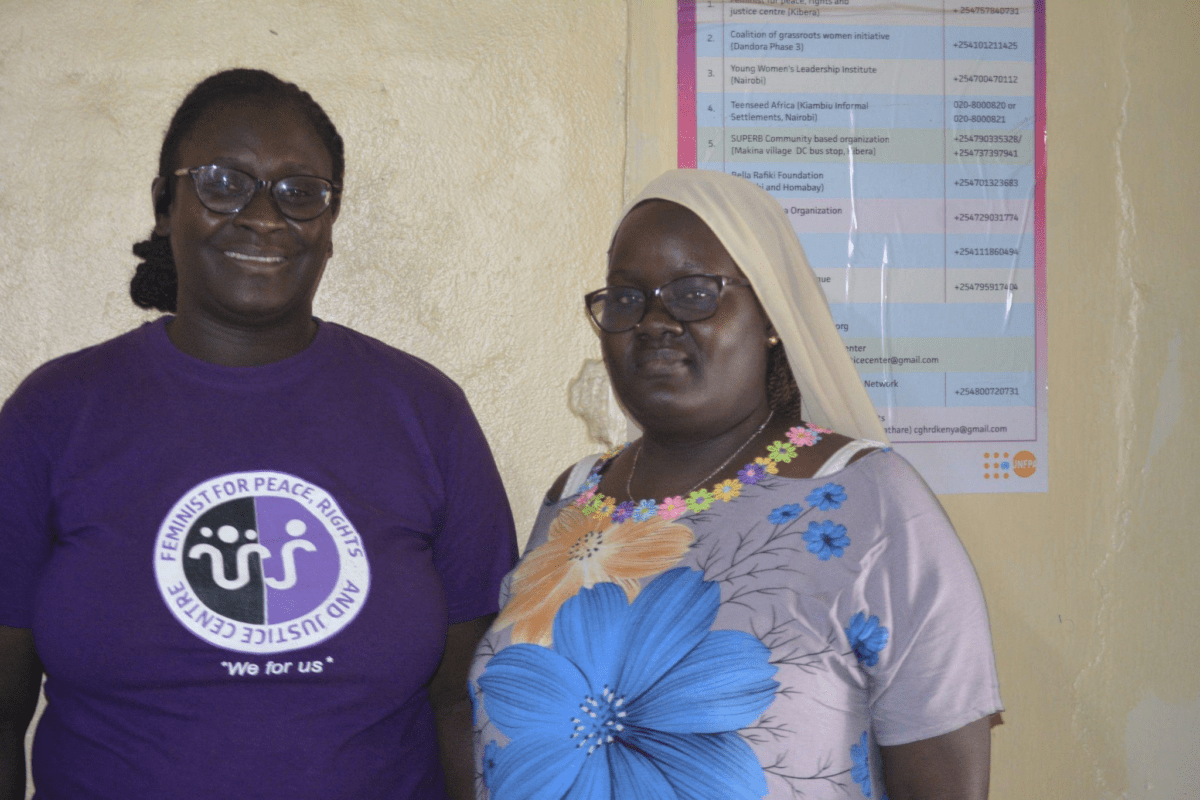
The centre bridges gaps in the referral pathway by coordinating between grassroots groups, communities, and service providers. “We empower the community and provide information that is otherwise scarce,” she adds.
The impact, Sarah says, is tangible. Survivors feel that the centre is a safe and trusting space, and they return when they face injustice or new incidents of violence.
They have 20 active members, and have been able to reach out to more than 1,000 women.
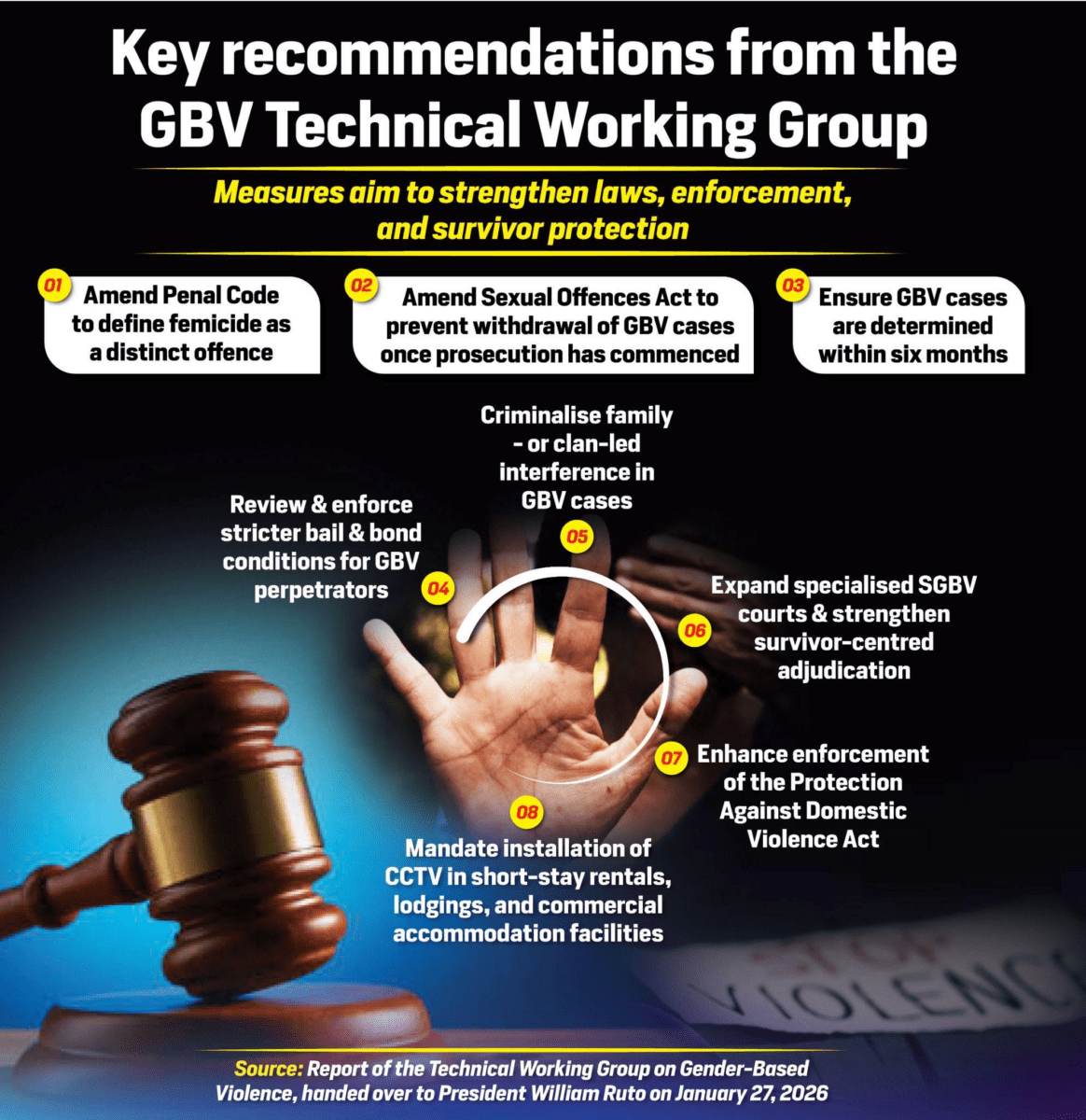
In January last year, President William Ruto gazetted 35 members of the Technical Working Group on GBV, including femicide, following a surge in cases. The report noted that femicide is not recognised as a standalone offence, resulting in inconsistent handling, poor data collection, and limited prevention strategies.
The Group highlighted that GBV manifests in physical, sexual, psychological, economic, and technology-facilitated forms, often remaining invisible or inadequately addressed. Vulnerable groups, including women in informal settlements, persons with disabilities, and men and boys, face compounded barriers. Community and family interference often silences survivors, undermining the justice system. Social media has also perpetuated victim-blaming, misinformation, and online abuse.
Kenya’s laws promise dignity and equality. In Kibera, women are demanding that those promises mean something. Their message is also a call to government action: “Women need opportunities. They need support.”
Survivors’ names have been changed to protect their identities

Leave a Reply