Grace Odembo: Why breaking the cycle of sex trafficking at the Coast is a community affair
Behind the postcard image of Kenya’s Coast lies a growing crisis of sex trafficking, where vulnerable girls are targeted and systems often fail to respond. In Kilifi, community-led efforts are pushing back by rescuing survivors, rebuilding lives, and exposing the systemic gaps that continue to allow exploitation to persist.
The coastal town of Kilifi, with its sandy beaches, often evokes a sense of tranquillity. But looks can be deceiving. Beneath that calm surface lies a more troubling reality.
Data from a 2019 report by the International Organisation for Migration (IOM) shows that at least 9,480 girls in Kilifi are survivors of sex trafficking. This reality reflects deeper systemic gaps in prevention, protection, and enforcement, where trafficking networks continue to operate despite existing laws and interventions.
As the tentacles of the KSh19 trillion (USD 150 billion) global trafficking industry extend into the Coast, Grace Odembo is working to disrupt it, often stepping in where formal protection systems fall short.
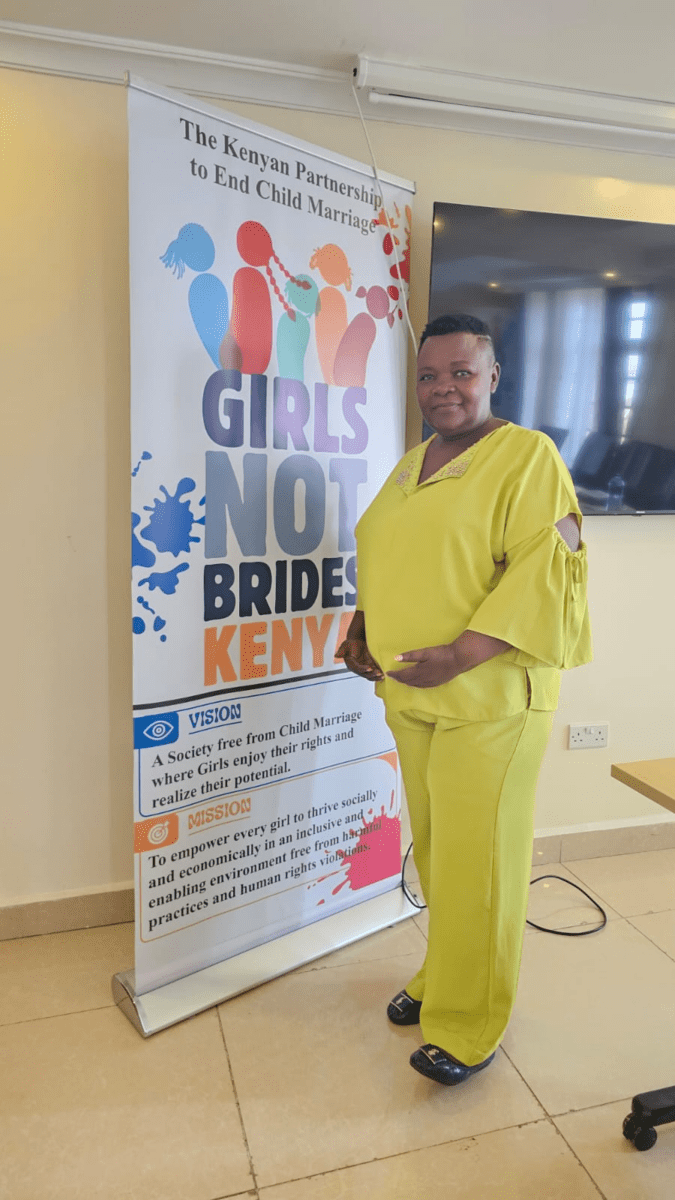
Odembo is the founder of Okoa Sasa, a community-based organisation that rescues, rehabilitates, and reintegrates survivors of sex trafficking and gender-based violence. Established in 2003 and registered in 2013, the organisation has supported over 1,000 women, girls, and children, and helped them find their footing.
Stepping where syustems fail
“Mimi ni wa hapa (I am from here),” she says. “The traffickers are also from here, and they target vulnerable girls in our communities. I rely on the trust of the community to do my work.” Although based in Mombasa, her work extends to Mtepeni Ward in Kilifi County, an area identified as a hotspot for trafficking due to its proximity to tourist zones.
At the centre of Okoa Sasa’s work are safe houses that provide survivors with shelter, medical care, and counselling. “The first step is restoring a survivor’s sense of belonging,” Odembo explains. “When they arrive, they have lost their dignity. We need to help them understand that what happened to them is not their fault.”
Thirty-year-old Zumi* is one of the survivors who found refuge at Okoa Sasa. She had endured prolonged physical abuse from her husband. When she sought help from family members, she was told to return home and be patient—to protect the family’s image. Her experience reflects broader social and institutional barriers that often discourage survivors from seeking justice or leaving abusive environments.
With no support and nowhere else to turn, she confided in a friend, who connected her to Odembo. “She welcomed my daughter and me into the safe house,” Zumi says. “After several counselling sessions, I regained my confidence.” Her daughter was cared for in the centre’s creche as Zumi began to heal from both physical and psychological trauma.
Today, she works with Okoa Sasa as a case management officer, helping other survivors navigate their own journeys toward recovery.
A report by the Technical Working Group on Gender-Based Violence, appointed by President William Ruto in January 2025, notes that Mombasa and Kilifi counties face significant challenges in providing safe houses for survivors—an essential link in responding to sex trafficking and other forms of gender-based violence.
“We should not view survivors as victims, but as people who need help. If you can offer help, help them. You don’t know what someone is going through,” says Zumi
Yet even when cases are reported, justice often remains out of reach.
Odembo notes that while many cases are reported to the police, few proceed to court—complicating efforts to secure justice for survivors. This reflects persistent gaps in investigation, prosecution, and survivor support within the justice system.
Partnerships bridge gaps
To bridge these gaps, Okoa Sasa has built close working relationships with law enforcement and other anti-trafficking organisations. The organisation partners with the Federation of Women Lawyers (FIDA) for pro bono legal services, Solidarity with Women in Distress (SOLWODI) for safe housing, and Inua Dada Organisation to support survivors—particularly girls—in returning to school to pursue their education.
Together, these partnerships demonstrate how civil society networks often compensate for gaps in state-led responses. “The law enforcement officers don’t just receive cases,” Odembo explains. “They walk survivors through statement recording and follow-ups. We build trust between traumatised survivors and the justice system. This collaboration helps ensure cases are properly investigated and prosecuted.”
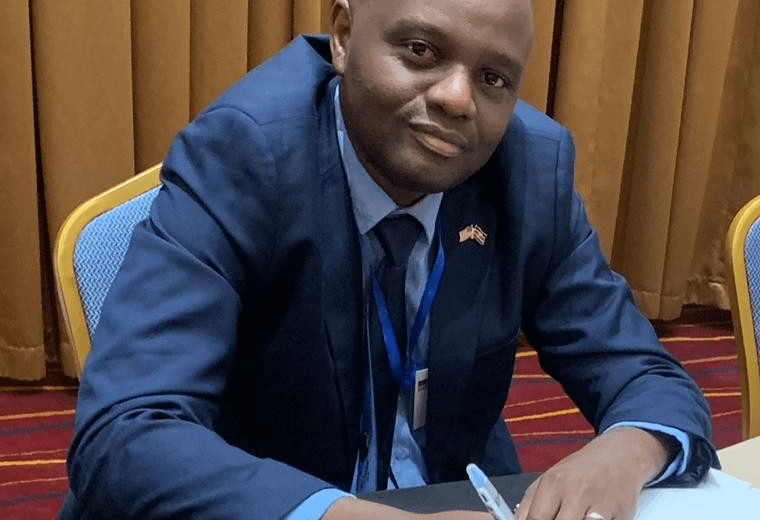
Alex Warui, a senior officer with the Directorate of Criminal Investigations (DCI), says he has worked closely with Odembo for eight years in efforts to combat trafficking and gender-based violence along the Coast.
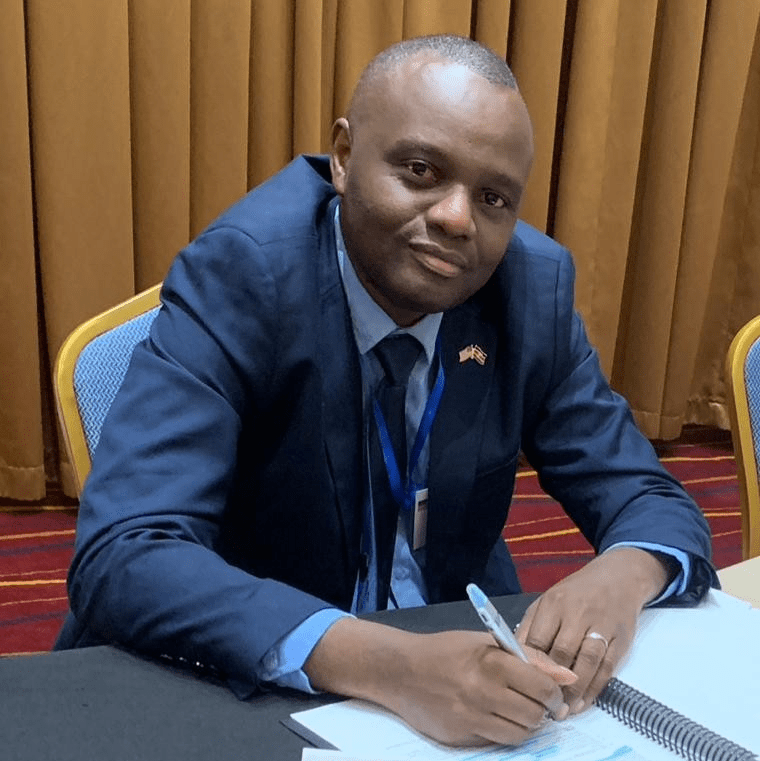
“Nilimpata hapa (I found her here),” he says, describing her as instrumental in tackling trafficking in Mombasa and Kilifi. He recalls a case involving a girl trafficked from Uganda.
“She came to Kenya expecting work but was forced into sex work. She sought help from a security guard, who brought her to Odembo while we followed up on the case,” he says. “Okoa Sasa is responsive, which makes referrals easier. We cannot keep survivors in police stations for long, and not all organisations provide the psychological support needed for recovery.”
For Warui, the work is demanding—but worthwhile. “Seeing survivors heal, rebuild their lives, and succeed makes every effort worth it,” he says. “Odembo’s commitment is selfless—she always puts others first.”
Fight against cartels
His account highlights the importance of coordination between community organisations and law enforcement in improving case outcomes. Still, he notes that dismantling trafficking networks takes time. “These cartels are well-funded and well-connected,” he says. “We must never take these cases lightly because of the impact on survivors.”
For Odembo, rescue alone is not enough. “The solution is at the community level,” she says. “It begins when communities can identify suspicious individuals. It continues when survivors return home and help others understand their rights.” This is particularly in contexts where formal systems are overstretched or inaccessible.
Through outreach campaigns in schools and public barazas, Okoa Sasa educates children and communities about the tactics traffickers use—often disguised as promises of jobs or better opportunities. These challenges are also reflected in international assessments of Kenya’s anti-trafficking efforts.
Odembo is under no illusion about the scale of the problem. Kenya remains on Tier 2 in the United States Department of State’s 2024 Trafficking in Persons Report—meaning the country does not fully meet the minimum standards for eliminating trafficking, but is making efforts toward compliance.
The report acknowledges progress in some areas, including improved victim identification tools for Kenyan diplomatic missions, increased funding for anti-trafficking activities, and expanded awareness efforts in rural and coastal communities.
But these gains are uneven.
A key gap remains the limited availability of safe houses, with the report noting that the government continues to rely heavily on civil society organisations, like Okoa Sasa, to provide shelter and financial support for survivors. This dependence points to a broader weakness in survivor protection systems, despite the existence of legal frameworks.
The report also raises concerns about accountability. “Despite ongoing concerns of official complicity in trafficking crimes, the government did not report any law enforcement action against allegedly complicit officials,” it states, adding that efforts to curb exploitation by fraudulent labour recruitment agencies remain inadequate.
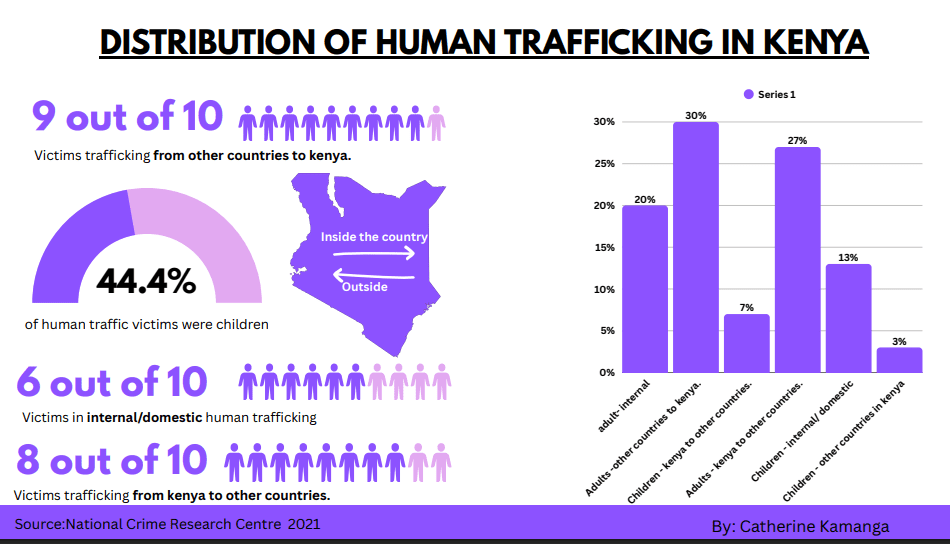
National data tells a similarly troubling story. A 2021 report by the National Crime Research Centre, titled The Problem of Human Trafficking in Kenya, found that adults make up the majority of trafficking victims across all categories. They account for roughly six in ten cases of internal trafficking, eight in ten cases involving movement from Kenya to other countries, and nine in ten cases involving trafficking into Kenya.
Children, while fewer in number, remain highly vulnerable, particularly in domestic trafficking. Women are disproportionately affected by both internal trafficking and cross-border exploitation, while men are more commonly trafficked into the country.
Despite legislation such as the Counter Human Trafficking Act (2010), the Children’s Act, and Kenya’s commitments under the United Nations Palermo Protocol, significant gaps in enforcement, coordination, and accountability continue to limit their effectiveness.
Cost of resistance
In the pursuit of justice, Odembo faces significant challenges. Her work exposes her to intimidation, threats from traffickers, and smear campaigns—risks that come with confronting well-established networks.
“Most traffickers are wealthy and well-connected,” she says. “Slow judicial processes retraumatise survivors and drain organisational resources. At the same time, poverty continues to fuel vulnerability, trapping many girls and women in cycles of exploitation.”
Limited funding adds another layer of constraint. Much of Okoa Sasa’s work remains donor-dependent, making long-term sustainability uncertain. These challenges reflect broader structural conditions that allow trafficking networks to persist.
In response, the organisation is exploring more sustainable models. It has introduced income-generating initiatives such as knitting, tailoring, and farming—programmes that also involve survivors as part of their healing and reintegration.
At the same time, Okoa Sasa is strengthening community-led approaches to cushion against declining donor support and ensure continuity of its work.
Looking ahead, Odembo is calling for systemic change. She advocates for mandatory training for law enforcement officers, stronger and more consistent funding for grassroots organisations, and increased county-level investment in anti-trafficking efforts.
For her, the path forward is clear—but uncertain. Whether these efforts will be matched by stronger enforcement, sustained funding, and coordinated policy action will ultimately determine the success of the fight against trafficking at the Coast.
*Not her real name

Leave a Reply