The Commune That Overturned the Rules of Power
In Pélengana, a rural commune near Ségou, Mali, the Accountable Local Governance Programme (PGLR+) is driving a transformative shift in how local governance works. By empowering youth and women, increasing transparency, and strengthening community participation, the initiative has raised tax collection, funded essential infrastructure, and rebuilt trust in local institutions.

The story of Pélengana shows what becomes possible when governance is effective and institutions are strong—communities trust, participate, and prosper together. It demonstrates how inclusive decision-making and accountable leadership can transform fragile systems into resilient ones, even in the midst of crisis.
That vision of communities shaping their own future through transparency, participation, and mutual accountability lies at the heart of the Accountable Local Governance Programme (PGLR+), a €21 million initiative funded by the Embassy of the Kingdom of the Netherlands and implemented by a consortium led by SNV.
Across 240 communes in Mali, PGLR+ is redefining how local institutions function by placing youth and women at the centre of decision-making and strengthening the bond between citizens and authorities through trust, innovation, and collective action.
In Pélengana, just five kilometres from Ségou, the programme’s vision has taken root. It has boosted tax collection, funded vital infrastructure, empowered women and youth, and restored confidence in local government. Through youth-led campaigns, women’s savings groups, and transparency contests, Pélengana is fast becoming a model of inclusive, resilient governance in Mali.
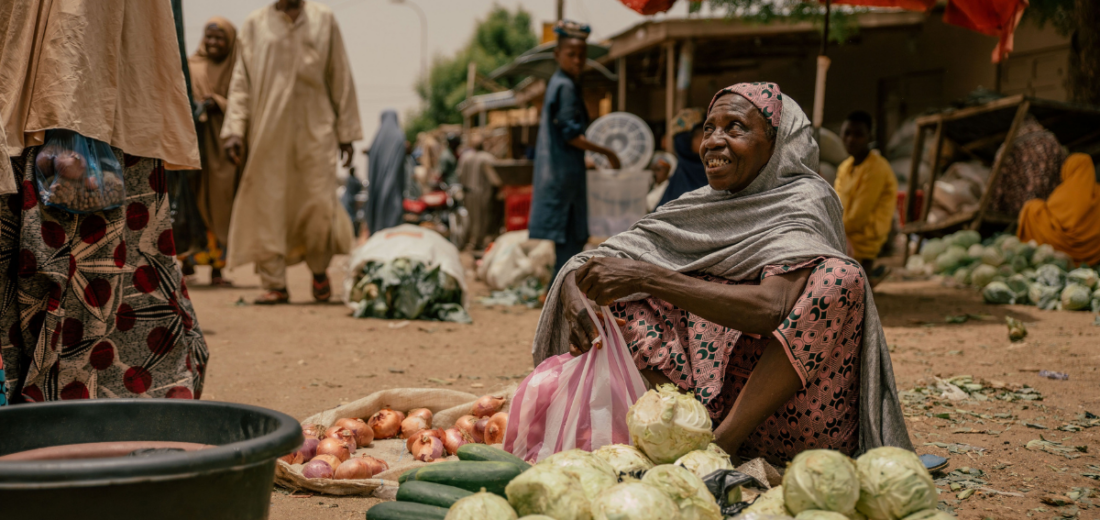
In this quiet but profound transformation stands Mastan Traoré, a market gardener and mother of three. Once too shy to speak in public, she now addresses community meetings with confidence. ‘The mentorship programme gave me the capacity and courage,’ she says proudly, serving today as the information secretary of the local Community Health Association (ASACO).
Seated beside her is Yaya Coulibaly, a young leader trained through the programme. He mobilises residents to pay the Regional and Local Development Tax (TDRL), which has risen dramatically—from just fourteen percent in 2019, to 74 percent in 2024.
Stories like Mastan’s and Yaya’s may seem isolated, but together they capture the essence of PGLR+. By placing youth and women at the centre of decision-making, the programme highlights challenges while celebrating concrete, sustainable solutions.

These personal journeys anchor the broader story of Pélengana’s transformation, and set the stage for how innovation and inclusion are reshaping local governance in Mali.
To grasp the scale of the transformation, one must first understand the systemic barriers that have long held back local governance in Mali. Decades of insecurity, institutional fragility, and eroding public trust have weakened regional institutions and strained relations between citizens and their leaders.
In regions such as Ségou, Timbuktu, Gao, and Mopti, low citizen participation and a lack of transparency have long hindered development.
Before PGLR+, community engagement in Pélengana rarely extended beyond village chiefs, while tensions over local taxes simmered. ‘People did not understand where their money was going,’ recalls Yaya. This disconnect reflects a national challenge: how to establish inclusive governance in a fragile context?
In Pélengana, young leaders trained by the local partner ALPHALOG have become catalysts of progress. Yaya, a PGLR+ focal point, embodies this change. ‘We organise discussions in every village to explain citizens’ rights and duties,’ he says.
Through door-to-door campaigns, these teams have demystified the purpose of the TDRL, helping raise its collection rate to an impressive 74 percent in 2024. The funds have since financed essential infrastructure, including a new civil registry office and a Youth Centre for cultural and economic activities.
Yet, as Mayor Diabaté Mariam Bamba emphasises, the transformation is about more than numbers. ‘Youth must be at the centre of initiatives because their vision differs from that of previous generations,’ she says.
Under her leadership, the programme has encouraged collaborative decision-making, with the communal council now consulting youth, women, and traditional leaders before launching projects. ‘Decisions are collective,’ she insists.

This inclusive process has ensured that young people’s priorities—such as building classrooms and rehabilitating water points—are now embedded in the commune’s Social, Economic, and Cultural Development Plan (PDSEC).
The economic ripple effects are already visible. Pélengana’s youth have launched agricultural cooperatives and cattle-fattening initiatives that are reducing unemployment and curbing rural exodus.
‘The Youth Centre hosts training and income-generating activities,’ says Yaya. One such example is the Union of Young Farmers, founded by trained youth, which has revitalised local agriculture and encouraged members to reinvest their profits in community projects.
These efforts—bolstered by the training of 9,418 young leaders nationwide—show how youth agency is reshaping local governance from the ground up. The impact extends beyond Pélengana.
The commune’s Youth Centre, equipped with chairs, an awning, and sound systems thanks to a transparency contest prize, now serves as a model for youth-led development across Mali, fostering both civic engagement and economic empowerment.
Women, too, are fast becoming the backbone of Pélengana’s transformation. Mastan, an active member of a Village Savings and Loan Association (VSLA), embodies this shift. ‘Our group allows us to buy fertiliser on credit and fund our projects,’ she explains.
In 2023 alone, 73 VSLAs were created, bringing together 1,800 women aged eighteen to forty. But their impact stretches far beyond financial resilience. These groups have become powerful social anchors.
‘Our weekly meetings strengthen our bonds and help us resolve family and community conflicts,’ Mastan adds, highlighting how VSLAs create spaces for dialogue and mutual support.
Mentorship—another PGLR+ innovation—is accelerating women’s empowerment. As a mentor, Chaka Traoré supports young women like Mastan in stepping into public engagement. ‘Mentorship taught me to speak with confidence,’ says Mastan, now an influential member of the ASACO.
While women’s participation in decision-making spaces stands at 27 percent, the trajectory is promising: 1,234 women now hold leadership positions in local structures, and former mentees are taking up roles in management committees. As PGLR+ project lead Binta Dansoko explains, ‘VSLAs and mentorship create a virtuous cycle where economic empowerment fuels political influence.’

This momentum extends beyond Pélengana. In communes such as Djenné in the Mopti region, young women are increasingly stepping into leadership roles within ASACOs, challenging long-standing norms. These steady shifts point toward more inclusive and equitable governance—driven by women’s growing agency and reinforced by PGLR+’s commitment to inclusion.
A cornerstone of PGLR+‘s impact is the transparency contest, which strengthens accountability by turning good governance into a source of healthy competition. Evaluated on criteria such as public assemblies, participatory budgeting, and financial transparency, the contest has helped Pélengana distinguish itself.
In 2018, the commune received thirty million FCFA, which they used to finance the construction of a new civil registry office. An additional seven million FCFA was used to equip the Youth Centre. ‘These awards show that transparency pays,’ reflects Yaya, recalling the tears of pride shed during the trophy ceremony at the regional governorate.
In 2024, 62 percent of the programme’s 240 communes participated, with Pélengana among the five nominees for the 2025 Pan-African Local Leadership Award. These distinctions help fund priority projects and reinforce public trust.
‘When people see tangible results, they engage more,’ observes Yaya. Supported by the Transparency Information System (SIT)—a digital platform where communes upload required documents for eligibility—the contest encourages better governance practices, making transparency a shared norm.
Public accountability sessions have further deepened openness. In 2024, Pélengana held twelve sessions across its villages, mobilising 2,096 citizens, compared to fewer than one hundred in earlier years. These forums enable the mayor’s office to report on its management, respond to public questions, and collect feedback.
‘People now understand budgetary choices,’ explains Madame Bamba. This openness has reduced misunderstandings and strengthened trust, as Binta Dansoko notes: ‘Citizens know where their money is going.’
The SIT platform amplifies this transparency by making budgets and reports publicly accessible. In Pélengana, this visibility has attracted new partners, including the World Bank, which funded fifteen classrooms through the PEDRAS programme (State Resource Deployment Project for Improved Services and Local COVID-19 Response), a Malian government initiative.
Improved access to clean water—reflected in functionality rates rising from 53 to 73 percent after training 1,113 artisans—further demonstrates how transparency fosters more effective public services.
Despite these gains, challenges persist. Insecurity in regions such as Gao, Tombouctou, Ségou, and Mopti continues to restrict participation, while early scepticism in Pélengana required sustained awareness efforts.
‘Some saw us as threats, agents of the mayor’s office,’ recalls Yaya. By leading through example—paying their own taxes and explaining their use—young leaders gradually broke down this resistance.
However, Madame Bamba highlights a broader issue: ‘Limited central government engagement creates a disconnect. Some communes have never received an official visit from government representatives.’

In response, PGLR+ adapts to local realities. In insecure areas, local focal points sustain activities, ensuring continuity. ‘We classify communes by security levels to tailor our approach,’ explains Binta Dansoko. In Pélengana, efforts focus on expanding participation, particularly for women, who remain underrepresented in strategic roles.
To secure lasting impact, SNV and the PGLR+ implementation consortium—comprising CORDAID, OXFAM, and Voice for Thought (V4T)—are institutionalising programme tools. SNV collaborates with the General Directorate of Territorial Communities (DGCT) on the transparency contest, and intergrating mentorship initiatives into national policies.
‘We want to embed these practices within local institutions,’ adds Binta Dansoko. In 2025, PGLR+ will prioritise capacity building and inter-communal exchanges, like those held in Pélengana, to inspire other mayors.
Digital innovations, including local WebTV platforms like Bandiagara 24, which engages over thirty thousand subscribers, further amplify impact. By training 9,418 young leaders, including 4,333 women, PGLR+ is forging a new generation of civic actors committed to sustainable governance.
Pélengana’s story highlights the challenges of local governance while celebrating innovative solutions. Thanks to the efforts of young leaders like Yaya and Chaka, women such as Mastan, and dedicated officials like Madame Bamba, PGLR+ is redefining the social contract.
‘Trust is built through dialogue,’ summarises Madame Bamba. By placing citizens at the centre, Pélengana offers a model for a more participatory and resilient Mali.

Leave a Reply