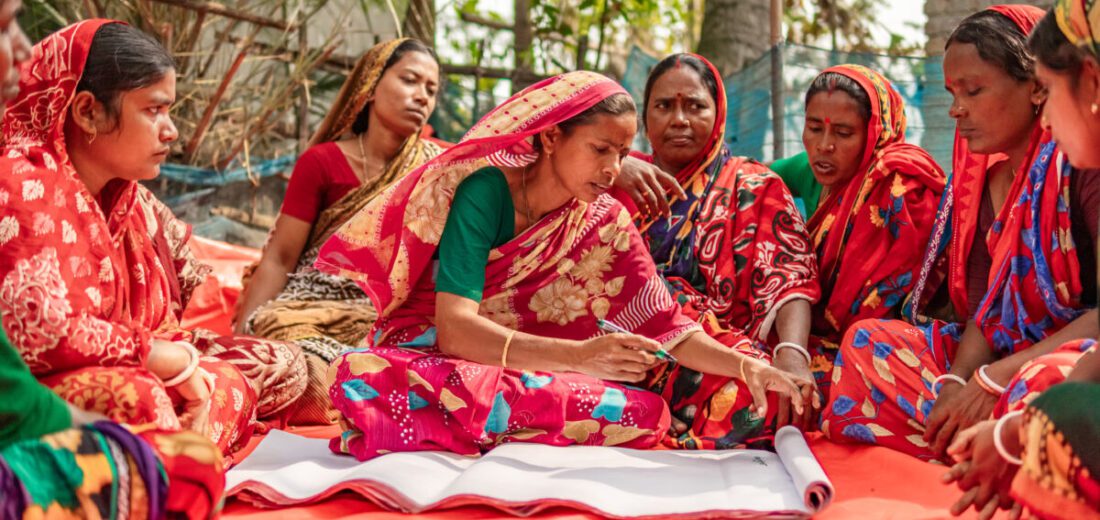
Communities should take the lead in their development
In locally led development, communities take the reins. They decide how to allocate funds and take full responsibility for their decisions. The programme ‘Reversing the Flow’ explores this approach by advocating for a shift in mindset: ‘Everyone, including donors, must adapt.’
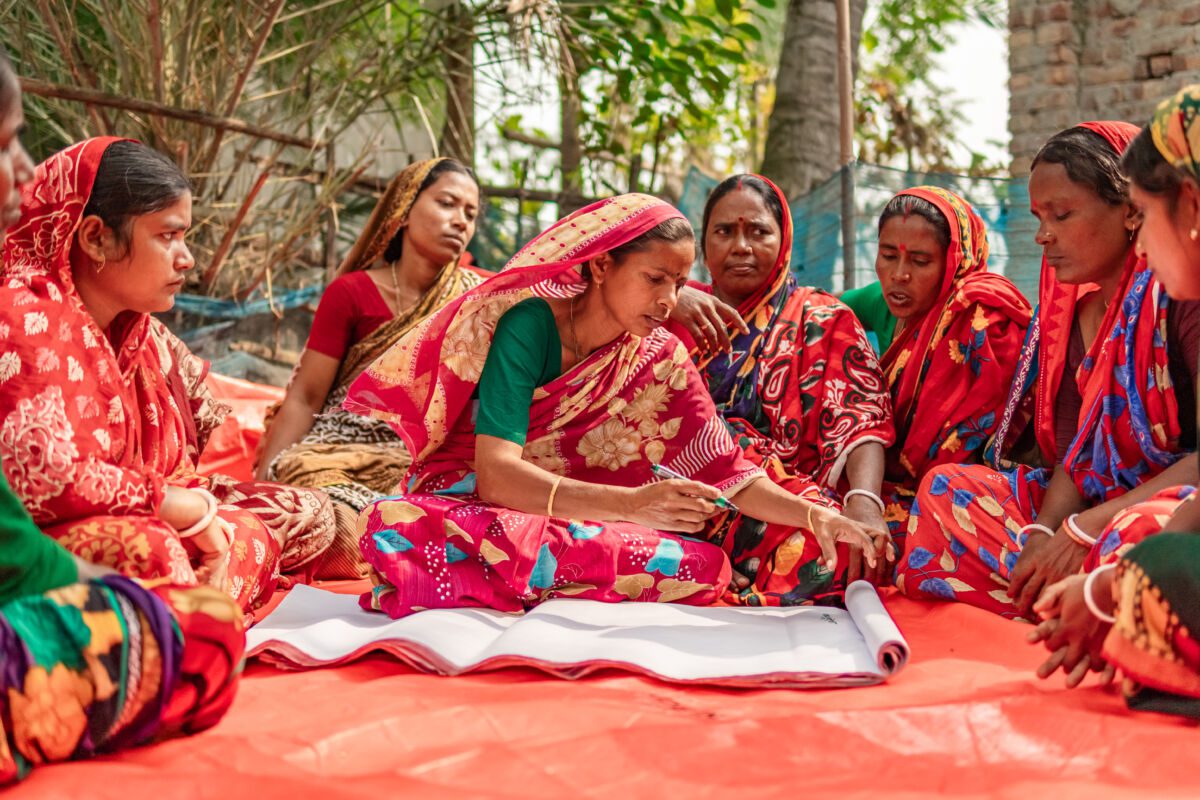
‘In the past, when a water tank was constructed, it was often labelled as belonging to a specific NGO, with signs crediting NGO A and donor B. Now, communities take charge. When they need a water tank, they organise, draft funding proposals, seek technical guidance, pool resources, and construct the tank.’
Some community members even want to place a sign next to the water tank with their names on it, because they see it as theirs. And with that sense of ownership comes a commitment to maintain it. That is what makes it sustainable, says James Mema, a project officer at the community development organisation IMPACT in Laikipia, Kenya.
Being from the community, Mema serves as a bridge between local people, organisations, and the government. He explains that in the past, many development projects were implemented according to preset plans. But despite significant investments, many ultimately failed. The reason? The community did not own them—so they did not last.
‘Now we have a chance to change this,’ says Mema, who works on the Reversing the Flow programme. ‘The biggest difference between this approach and traditional development work is that now, funding goes directly to communities. It builds their confidence. It is them who decide what needs to happen.’
Reversing the Flow is a Dutch-funded initiative that supports communities in vulnerable settings by strengthening their water security. The programme empowers communities through locally led water and climate adaptation efforts and is guided by the principles of locally led adaptation.
Launched in 2022, the programme offers long-term funding—spanning ten years—and is implemented through ten local organisations, or ‘hubs,’ across five countries: Bangladesh, Burkina Faso, Ethiopia, Kenya, and Sudan.
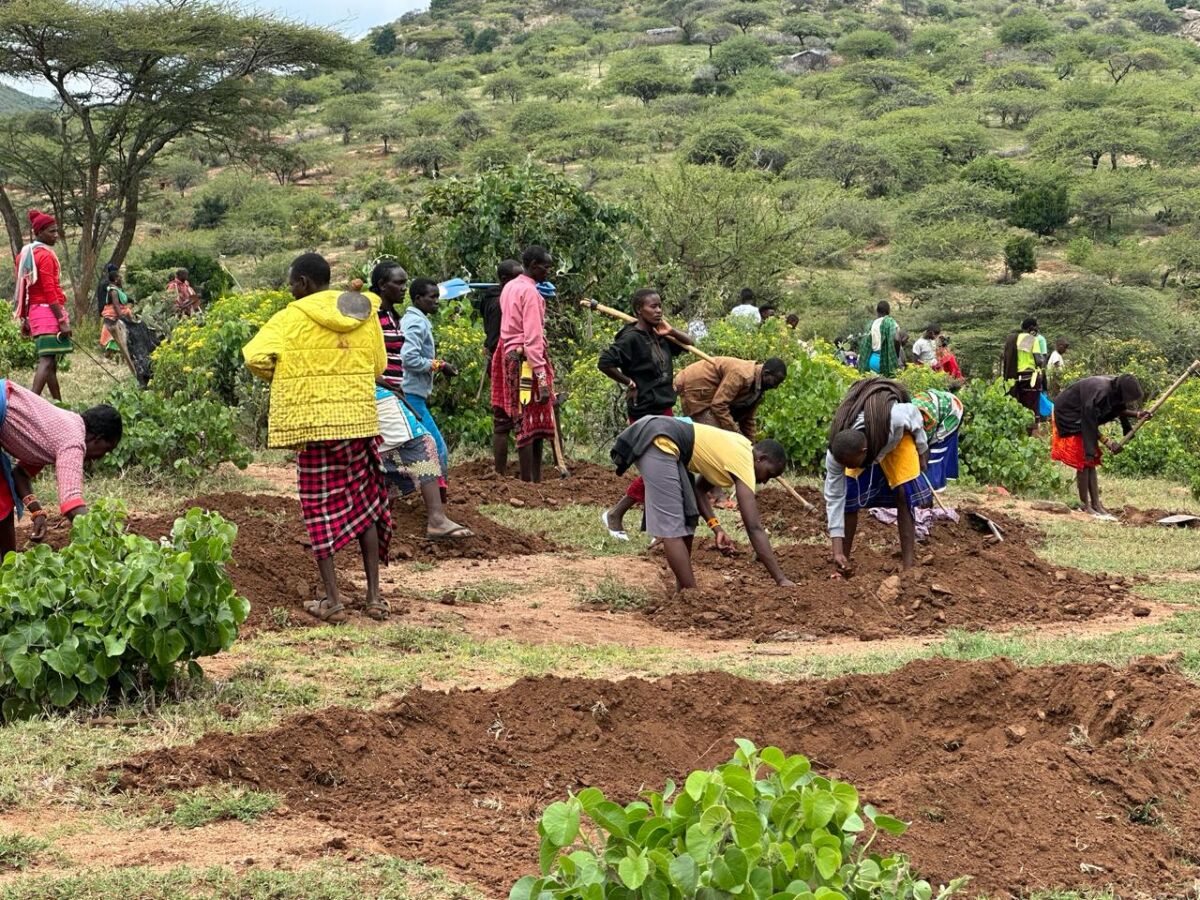
Seventy percent of the programme’s total subsidy budget—around €13.5 million in its first phase—goes directly to local communities, who decide for themselves how to use it. The remaining thirty percent is allocated to the hubs, which support and facilitate the process.
The origins of Reversing the Flow can be traced back to a 2018 evaluation of international water policy conducted by the Policy and Operations Evaluation Department (IOB) of the Dutch Ministry of Foreign Affairs.
The review found that only about ten percent of the Netherlands’ investments in international water cooperation reached communities—and that much of the funding was spent on issues that did not reflect local priorities. But how new is the idea of locally led development?
For decades, development cooperation has emphasised the importance of community participation in projects. ‘By transferring money directly to communities, we are truly taking the next step,’ says Sandra Cats, coordinator of Reversing the Flow at the Netherlands Enterprise Agency (RVO).
An anthropologist with years of experience in development cooperation, Cats explains: ‘Locally led development means those who face the problems have real control over the solutions. It is not just about involving them—it is about trusting them with the funds. That also means donors have to let go of the belief that they know best how the money should be spent.’
‘One of the biggest challenges in the development cooperation sector is the persistent belief that local people lack capacity,’ she continues. ‘But communities do have capacity—they often know exactly what to do. Sometimes, they just do things differently than we are used to. We need to reverse the way we think about development. That is exactly what the name Reversing the Flow is about.’
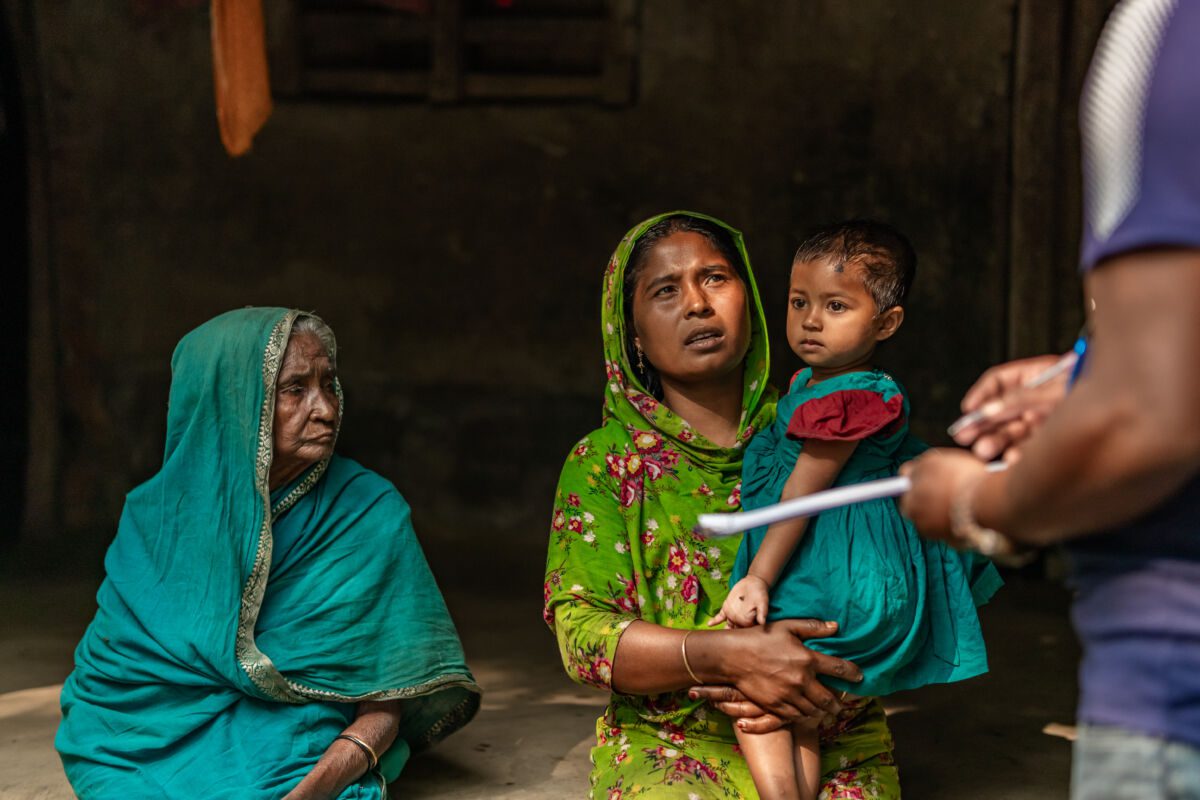
In southern Bangladesh, Hassan Abdullah Rafath of the social development organisation Uttaran works with communities living on poldered land. In traditional development cooperation, it is often the donors who determine the needs and priorities of communities without proper consultation, says Rafath.
‘An international NGO based in the capital might design a project without truly understanding the local context,’ says Rafath. ‘For instance, a project might focus on cow rearing, where someone would receive a cow as part of a livelihood intervention. But that person might not know how to rear cows, might lack the necessary resources, and would actually prefer fish farming instead.’
Rafath stresses the importance of recognising local knowledge and supporting communities to organise themselves. ‘They should be able to develop project proposals based on their priorities—and present them to local governments and other stakeholders.’
What makes Reversing the Flow unique, Rafath explains, is the freedom it gives communities to identify their priorities and decide how to spend the funds—as long as it is linked to climate change adaptation.
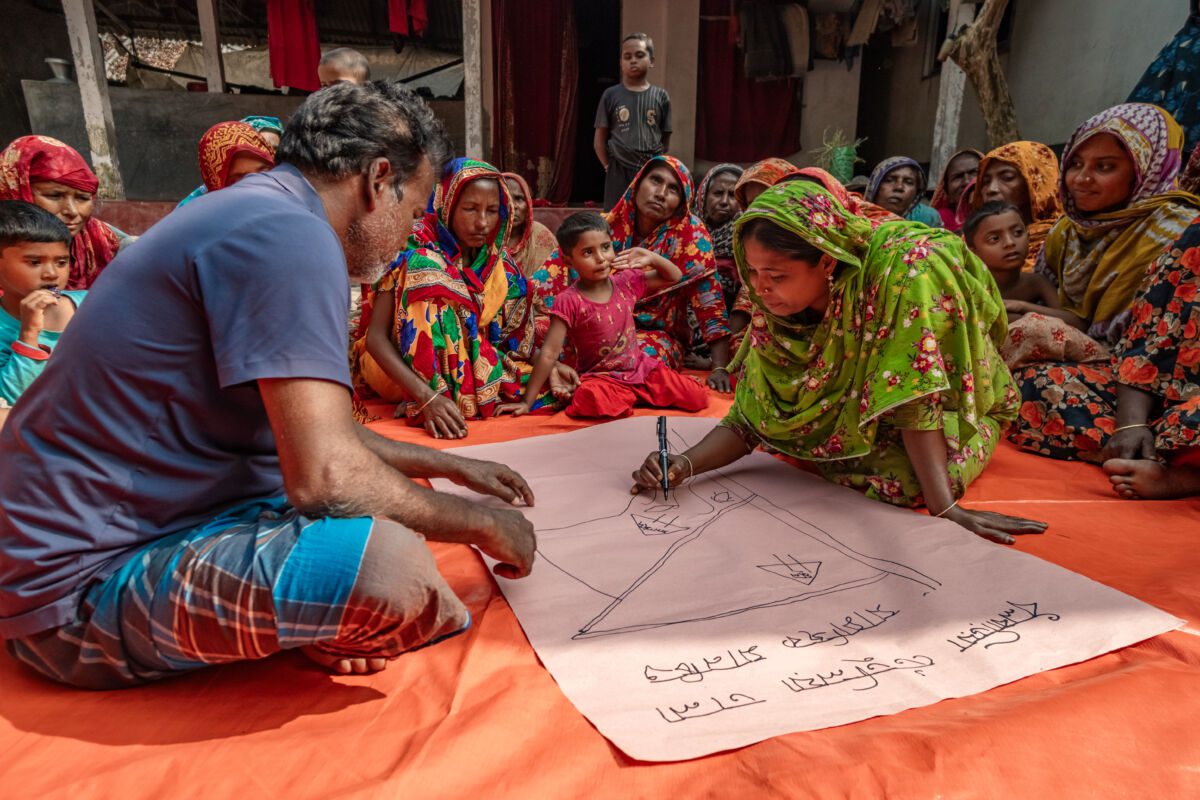
In one community, for instance, waterlogging caused the cemetery to flood, and the dead would be washed away. For them, the urgent priority was to establish a cemetery on higher ground. The programme allowed them to respond to that specific need.
Directly financing communities demands trust and a willingness to let go, says Sandra Cats. ‘I sometimes compare it to raising children. You can spend all your time putting down rubber tiles to prevent them from falling, or you can say: let them learn to fall properly.’ She pauses, then adds, ‘And learning to fall—that is something we, as donors, need to do first. We are the ones who must change. We have to learn to let go.’
This shift in approach also applied to the programme’s funders at the Ministry of Foreign Affairs and to RVO as coordinators. At first, a programme like Reversing the Flow, which is based on direct funding to communities, was considered risky, says Cats. ‘Unlike traditional programmes, Reversing the Flow did not define preset targets or standard indicators.
‘That is because it is the local people who decide what needs to be done. And the ministry gave us the space to do that,’ she states. The same goes for the programme’s duration. ‘Building trust and relationships takes time—so does restoring landscapes. That is why the programme was designed to run for ten years.’
According to Karen Stehouwer, a colleague of Cats at RVO, the entire programme is built on trust in the expertise of local partners. ‘We did not choose them randomly. We specifically looked for organisations that were willing to embrace this new way of working—partners who dared to let go.’
The ten hubs implementing the programme each have a strong, long-term track record—partly thanks to decades of Dutch investment in development cooperation. These partners are deeply rooted in their local contexts; they understand community dynamics, power relations, and how to co-create genuinely community-led solutions.
‘How they go about that is not something we should interfere with,’ says Cats. ‘At the same time, we do engage in open, reflective conversations with them—on how they apply the locally led approach, and how they navigate and address structural inequalities, even within the communities themselves.’
This approach also demands a willingness to unlearn certain culturally ingrained habits, Cats adds. ‘We are always in a hurry and expect quick results. So when it took months just to fill out a form, I found that challenging. But maybe something important was happening during that time—something I could not see. That, too, is part of letting go.’
Accountability for expenditures in the Reversing the Flow programme is handled differently from traditional development programmes. ‘The hubs report on their spending to RVO,’ explains Karen Stehouwer. ‘But for the portion of funds that is re-granted to the community, we do not require formal audits or standard financial reports. Instead, community members are accountable to themselves.’
How that accountability is practised is left up to the community. ‘It could be through cash books, before-and-after photos of the project, community meetings—whatever fits their culture and way of doing things,’ says Stehouwer.
James Mema affirms this. ‘We do not audit the community. They hold themselves accountable. Transparency is essential. Everyone knows how much money is involved and what it is meant for. For example, if they agree to install three kilometres of water pipeline in three months, that plan is shared with everyone—often through WhatsApp.’
Communities also gain valuable insights into project costs and implementation processes by observing and comparing with others. ‘If a pipeline is not completed within three months, people will start asking questions—‘What happened? Where is it?’ says Mema. ‘That is our form of accountability. It is peer-driven and rooted in transparency.’
Still, ensuring that everyone has an equal voice is a critical challenge. ‘Someone who speaks well does not always have the best ideas,’ he notes. ‘And if only the confident or outspoken dominate the discussion, others might be excluded. That is not what we want. The goal is to place control in the hands of the whole community—not just a few individuals.’
To address this, Mema and his colleagues make a deliberate effort to involve diverse groups. ‘We organise separate meetings for women, youth, and so on. We also rely on trusted community resource persons—people who live in the village—to check in with those who might not speak up in public forums. And we validate what was discussed in the larger meetings through smaller group discussions.’
The outcome of the programme, he says, is communities that are empowered and equipped to take charge of their development in the future. They are also building stronger networks with one another and with local government structures.’
He points to an example in Laikipia, where three neighbouring communities each started with small-scale projects but wanted to tackle a bigger issue the following year. All three communities depend on the same river catchment and agreed to build a sand dam together.

The dam slows the river’s flow, allowing water to seep into the ground. Over time, this increases groundwater recharge, revitalises vegetation, improves grazing conditions for livestock, and stores water that can be used during dry spells.
This brings up a crucial question: What is the right level for decision-making? Not all challenges can or should be tackled by a single community. ‘That is exactly the kind of question we have to think about when applying a locally-led approach,’ says Cats.
‘Locally-led development does not always mean decisions happen at the individual community level, like in traditional community-based models. It depends on the nature of the problem and whether the community can address it.’
Some issues require the involvement of local government. In other cases, challenges cross community boundaries and demand collaboration between different groups or coordination with formal institutions.
This is where the hubs play a critical role: they help communities connect with government bodies or other stakeholders responsible for larger-scale interventions. But central is the principle that the ones who experience a problem are the ones holding the decision-making power over the solution.
There is still resistance to the locally led development approach, acknowledges James Mema. ‘Some NGOs worry that if communities become capable of writing their proposals and managing funds, they will no longer be needed,’ he says. This concern is rooted in a deeper belief that still lingers in parts of the development sector: local communities cannot lead and implement their projects.
To counter this perception, the programme collects and shares real-life stories and videos that showcase how the approach works in practice. Knowledge partner MetaMeta curates and distributes these through the platform www.thewaterchannel.tv, making the evidence publicly accessible.
At first, Mema says, even communities themselves were hesitant. ‘This way of working demands more responsibility. It is a shift in mindset and practice, and it takes time.’ But now, in the third year of implementation, he sees tangible change. ‘The self-esteem of communities is growing. They draft their proposals, understand how to seek funding, and even train other communities to do the same.’
Momentum is building. ‘More and more NGOs are starting to believe that this might be the way forward,’ says Mema. ‘It is becoming a movement.’
Box
Localisation or locally led development
What is the difference between localisation and locally led development? Localisation is often used as a general term when referring to making funds locally available. But it does not say much about who has ownership. So, when an International NGO moves its headquarters from the EU to Nairobi, that may be referred to as localisation. Karen Stehouwer: ‘For us, locally led development is about devolving decision-making power, putting it at the lowest appropriate level. It starts with the question: Whose problem is this? Who is experiencing it? And those are the people who should decide how to address it.’
https://english.rvo.nl/casestudies/changing-approach-sudan
When you are forced to let go
The Reversing the Flow programme had just started in Sudan when violent conflict erupted between the Rapid Support Forces (RSF) and the Sudanese Armed Forces (SAF). More than nine million people were forced to flee, and commodity prices surged.
In times like these, you are forced to let go, be flexible, and adapt your approach, which shows the work of the Reversing the Flow hub, SOS Sahel Sudan. The internet was continuously interrupted, so staff switched to face-to-face meetings and had locals deliver old-fashioned letters to the community. As fuel prices soared and privately owned cars became the target of illegal confiscation, SOS Sahel Sudan turned to public transportation and rented local vehicles to continue their work.
Moreover, the conflict has resulted in government-imposed restrictions on organisational activities and meetings in the Bara landscape. To counter this, SOS Sahel Sudan appointed a local steering committee composed of local leaders, government officials and technical experts. They managed to convince the government to lift the restrictions on meetings, allowing the programme to continue in the midst of the ongoing conflict.
Links
Principles for Locally Led Adaptation Action – Global Centre on Adaptation:
https://gca.org/reports/principles-for-locally-led-adaptation-action/
IMPACT: https://impactkenya.org/

Leave a Reply